BluetoothProducts
Bluetooth and BLE product design that connects reliably and certifies first time.
Bluetooth clients we've worked with





Bluetooth projects we've delivered
Connected products that pair reliably and ship with certification.
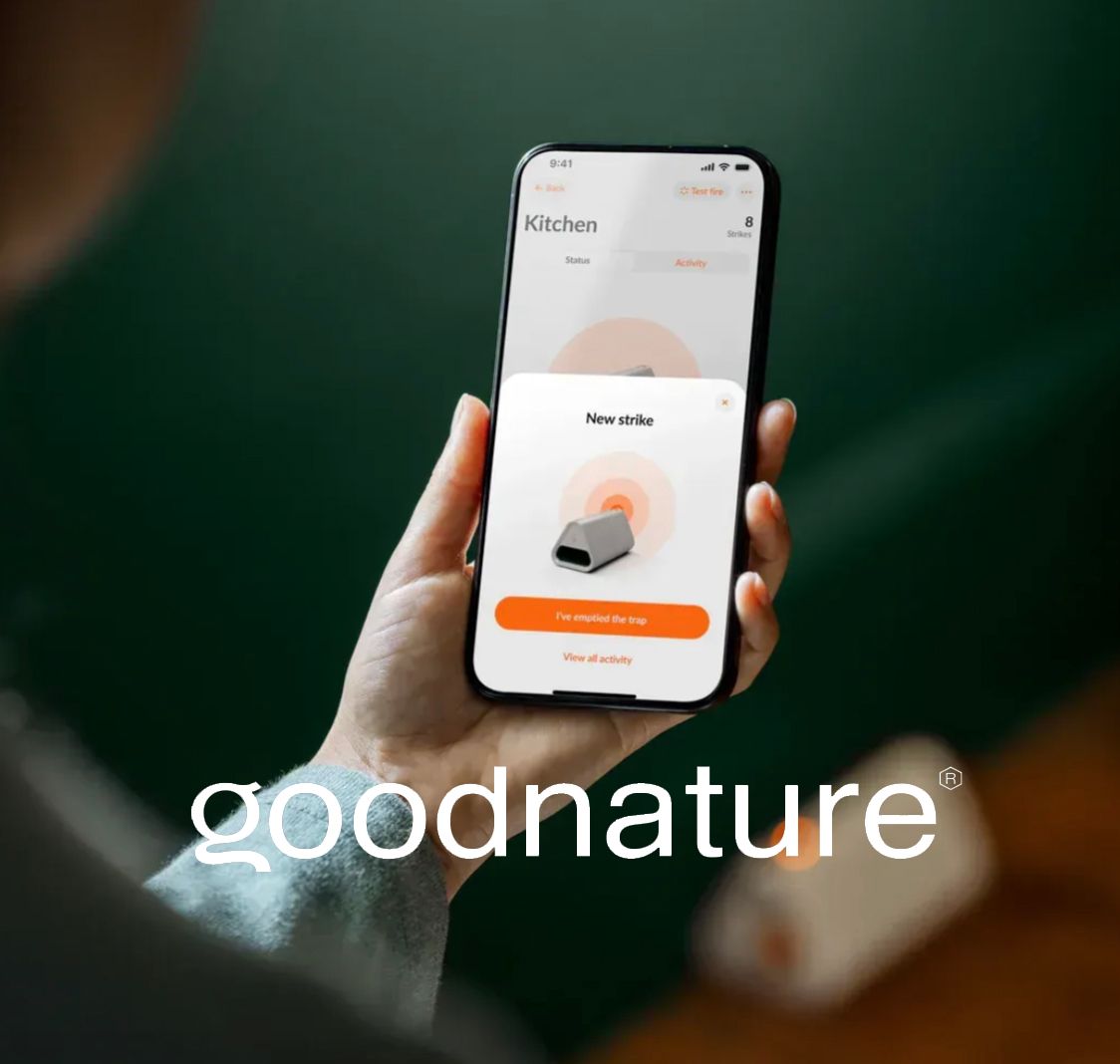
Bluetooth Smart Mouse Trap
A Bluetooth-enabled smart mouse trap that humanely kills mice and notifies users via Bluetooth to the Goodnature mobile app.
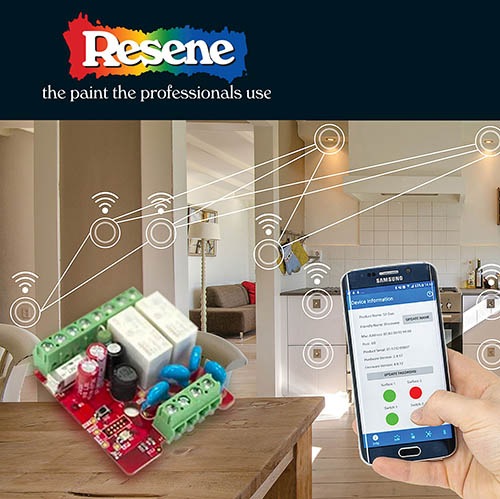
Smart Paint Switch
A Bluetooth-connected capacitive paint switch for Resene, with 230V mains integration, OTA firmware updates, and smartphone configuration.
Need a Bluetooth product
designed?
Delivered by New Zealand's leading electronic product design team.
I need a Bluetooth productWhat we build
From BLE sensor beacons to Bluetooth audio products. Short-range wireless designed for reliable, power-efficient connectivity.
BLE Sensor Products
Low-power BLE 5.x sensor nodes for environmental monitoring, asset tracking, and wearables. Multi-year battery life with optimised connection intervals.
Bluetooth Audio
Classic Bluetooth and LE Audio for speakers, headsets, and hearing devices. A2DP, HFP, and LC3 codec support with low-latency streaming.
Mobile App Connectivity
BLE GATT services for iOS and Android communication. Device provisioning, firmware OTA updates, and data synchronisation over Bluetooth.
Bluetooth Location Services
Indoor positioning, asset tracking, and proximity detection. Bluetooth direction finding (AoA/AoD) and RSSI-based ranging.
Ultra-Low Power Design
Coin-cell and energy-harvesting power budgets. Sleep current optimisation, duty-cycling strategies, and power profiling.
Bluetooth Mesh
Scalable mesh networks for building automation, lighting control, and industrial sensor networks. Provisioning and network management.
Antenna Design & Matching
PCB trace antennas, chip antennas, and external antenna integration. Matching network design and range optimisation.
BQB & RF Certification
Bluetooth Qualification Body (BQB) listing, plus RCM (AU/NZ), FCC, and CE certification. Pre-compliance testing and test lab coordination.
Secure Communication
BLE pairing, bonding, and encrypted data transfer. Secure DFU (device firmware update) and authentication protocols.
Bluetooth product questions
Common questions about cost, chipsets, certification, range, and battery life for Bluetooth and BLE product development.
How much does a bluetooth project cost?
Bluetooth project costs depend on the number of engineering disciplines involved (hardware, firmware, mechanical, software), the type of Bluetooth (Classic, BLE, mesh, audio), the certification scope, and whether a companion app is in play. Most Bluetooth projects sit in the high five-figure range. More demanding work can extend into six figures. That covers audio profiles, mesh networking, full Bluetooth SIG and regional certification, and companion apps. Send us a brief and we'll come back with a realistic estimate. Get in touch.
Should I use Bluetooth Classic or Bluetooth Low Energy (BLE) for my product?
Use Bluetooth Low Energy (BLE) for sensors, wearables, beacons, asset trackers, and any battery-powered product where multi-year coin-cell life matters. Many modern products use dual-mode chipsets that support both. LE Audio (Bluetooth 5.2+) is rapidly replacing Classic for new audio products, thanks to lower power and the LC3 codec.
What Bluetooth chipset do you recommend for a new product?
Chipset selection depends on features, power budget, and volume. Nordic nRF52832 and nRF52840 are our go-to for most BLE sensor and IoT products, thanks to mature SDKs and strong low-power performance. Nordic nRF5340 suits dual-core designs needing BLE 5.3, LE Audio, or Matter. We'll understand your application and needs first, then pick the best fit for capabilities, quantities, and budget.
What range can you achieve with BLE?
BLE range is 10 to 50 metres indoors and 100 to 400 metres line-of-sight. The exact number depends on antenna design, transmit power, and BLE 5.x features like Long Range (Coded PHY). With proper antenna matching and +8 dBm output, we have delivered over 1 km line-of-sight on BLE 5 Long Range.
What battery life can you achieve with BLE?
The main factors that drive a product's battery life are how often the device can sleep versus being active, and the energy capacity of the battery. Depending on the application, we can achieve from 6 months to 5 years. All of this is considered at the start of a project, and we'll walk you through the trade-offs.
“They have been responsible for the electronic firmware development of the Omeo. It has been a challenging task but they have always been up to the challenge... competent, intelligent and highly qualified individuals.”Peter SteenbergOMEO
Want us to handle the whole product?
Bluetooth design is just one piece. If you don't want the headache of managing hardware, firmware, mechanical, and manufacturing separately, we handle the entire product development under one roof.
Other ways we can help
Bluetooth is just one part of what we do. Explore our other services.
PCB Design
High-speed digital, RF, power electronics, and mixed-signal. Custom boards from schematic to production-ready files.
Firmware/Software Design
Bare-metal and RTOS firmware. We write the code that runs on the boards we design.
Volume Manufacturing
From 100 to 100,000 units. We handle the factory, logistics, and QA so you don't have to.