Full ProductDevelopment
One team manages your entire electronic product lifecycle, from idea to manufacturing.
Some of our clients











Electronic products we've taken from idea to production
End-to-end electronic product development across aviation, IoT, automotive, consumer electronics, and more.
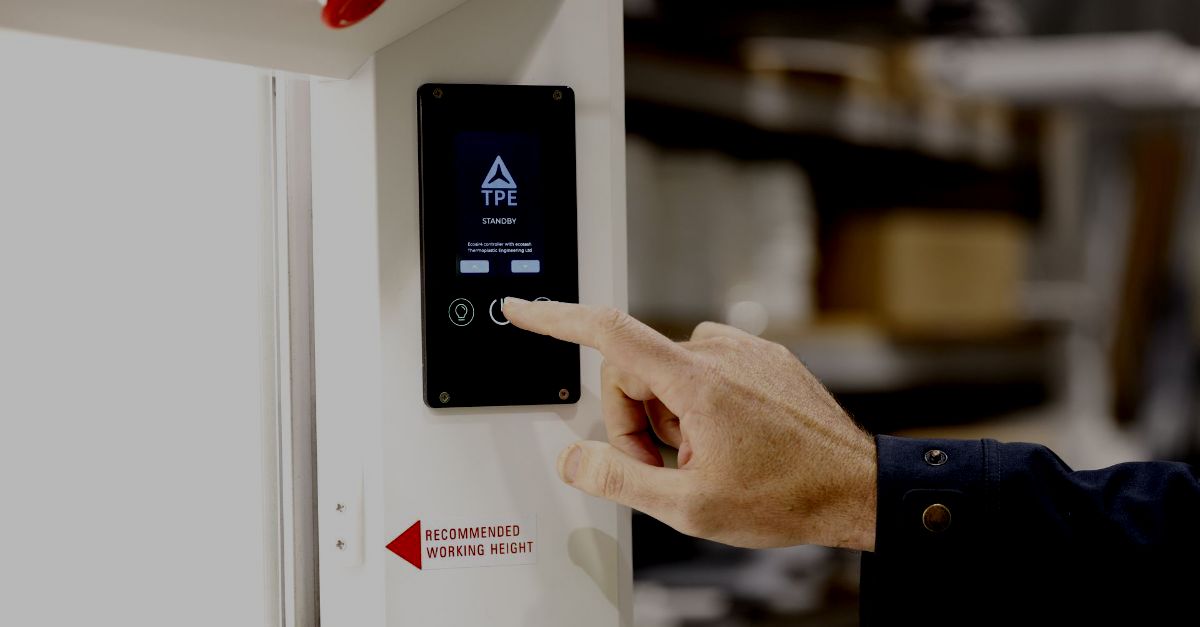
Touch Screen LCD Controller
Unified controller and touch screen display for TPE's fume cupboards. Multiple controllers consolidated into one PCB.

Aircraft Lightbar
Custom avionics lightbar for Ravensdown's pilots. RGB LEDs and LCD arrays built to withstand sunlight, 120-knot winds, and rain.
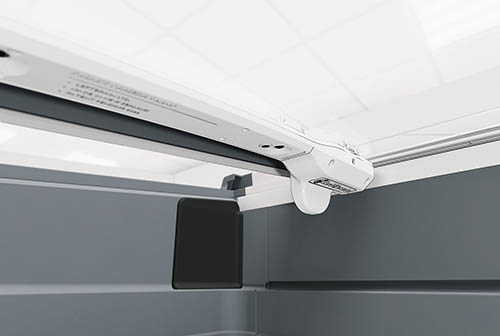
Cellular Connected Smart Freezer
Custom camera, cellular IoT, and wireless charging. Complete turnkey solution from design through to volume production.
Have an electronic product
you need built?
One team takes you from concept to manufacturing. Here's how it works.
Start a conversationOur process
A proven process refined over 18 years and 1,100+ projects. You have visibility and sign-off at every stage.
Pre-Engagement
Tell us about your product idea, what it does, where it'll be used, and what you need. We give you honest technical feedback and outline what the rest of the journey looks like, end to end.
- Honest technical feedback on your idea
- A plan for how we'll prototype your product
- What to expect from testing
- What compliance looks like for your product
- Your volume targets and manufacturing needs
- Ballpark investment and unit cost ranges
Typically: NDA, engagement letter, and Phase 1 proposal
Discovery & Specification
A short, scoped engagement to de-risk the project before detailed design begins. We translate your customer requirements (what the product needs to do, who it's for, where it'll be used) into a technical specification (architecture, key components, compliance path).
- System architecture and concept designs for your product
- Early prototypes to prove out risky assumptions
- A test plan with clear pass/fail criteria
- A list of standards your product must meet
- A shortlist of suitable suppliers
- Refined R&D budget and preliminary parts cost
Typically: Specification report and Phase 2 proposal, approved by you before we move to design
Design & Development
This is where the bulk of the work happens. Our hardware, firmware, and mechanical teams work in parallel, building working prototypes through 2 to 4 PCB revisions, with you reviewing and signing off at every stage.
PCB Design
Schematic capture, component selection, PCB layout, signal integrity simulation, and DFM review.
Firmware / Software
Embedded firmware running concurrently with hardware design. Architecture, drivers, communication stacks, and application logic.
Mechanical Design
Enclosures, thermal management, IP rating, and 3D printed prototypes. Designed alongside electronics for seamless integration.
- Working prototypes, typically 2 to 4 PCB revisions
- Hardware, firmware, and full system tested end-to-end
- Design built to pass compliance
- Design optimised for manufacturing and test
- Compliance costs and estimated unit price
Typically: Design files and prototypes ready for compliance
Testing & Compliance
A pre-production prototype goes through rigorous testing and into formal certification. EMC pre-scans, reliability tests, field trials, and benchmarks run in parallel with formal compliance testing and certification submissions.
- Design refined and fully documented
- Pre-production prototype built and validated
- EMC pre-scans, reliability tests, field trials, and benchmarks
- Formal compliance testing and certifications submitted
- Supplier selected and manufacturing quotes in hand
- Updated unit and tooling costs
Typically: Test reports and compliance certificates
Production Readiness
Design locked down and ready for volume. We design test rigs and tooling, run a pilot manufacturing batch, and validate the production line (PVT) so the first volume run goes smoothly.
- Design locked down; test rigs and tooling designed
- Production samples and pilot manufacturing run
- Production line tested and validated (PVT)
- Tooling, assembly, and test procedures locked in
- Product labelling and markings sorted
- Final unit and tooling costs
Typically: Production-ready files, assembly guides, and test procedures
Production
Volume manufacturing underway. We provide engineering support through production, sign off the first production unit, and run ongoing quality checks. Manufacturer compliance support if needed.
- Engineering support through production
- First production unit inspected and signed off
- Volume manufacturing underway
- Ongoing quality checks
- Manufacturer compliance support if needed
- Unit cost reduction where possible
Typically: Finished products and production documentation
Learn more about productionSupport & Optimisation
We stay engaged for as long as you need us. Product updates, revision prototypes, field performance monitoring, ongoing compliance, and supply chain management keep your product running and improving.
- Product updates and improvements
- Revision prototypes
- Field performance monitoring
- Ongoing compliance updates
- Supply chain management
- Parts cost reviews and cost reduction
Typically: Updated docs, revisions, and future version proposals
Electronic product development questions
Common questions about cost, timelines, scope, IP ownership, and how turnkey electronic product development actually works.
What's the typical investment for a full electronic product development project?
Full product development delivers a fully-engineered, compliant, manufacturing-ready product, with hardware, firmware, mechanical, and everything in between. Most programmes at this level require a six-figure investment. Tighter scopes can land in the five-figure range. The final investment depends on research depth, complexity, prototype iterations, target volumes, cost constraints, and compliance scope. A functional prototype is a different deliverable entirely and costs considerably less. Contact us to discuss your specific requirements.
How long does it take to go from concept to first production run?
Most full product development programmes take 9 to 18 months from concept to first production run. Compliance testing can push it longer. A typical project starts with a few weeks of concept and specification. Detailed design then takes several months, with electronics, firmware, and mechanical in parallel. Prototyping and design verification take another few months. Then certification and pilot production, before volume production. Certification-heavy products (aviation, automotive) often add 6 months or more on top. Every project is different. Talk to us about your concept and we'll map a realistic schedule. We've refined this process across more than 1,100 projects since 2008.
What is included in a turnkey electronic product development project?
A turnkey engagement covers everything needed to take an idea to a manufactured product. That's requirements capture, system architecture, PCB design (schematic and layout), firmware and embedded software, mechanical design and enclosure engineering, industrial design, prototyping, design verification testing, regulatory compliance, production documentation, tooling and test jig design, supplier selection, pilot production, and volume manufacturing setup. Beta Solutions runs all of this under one roof in New Zealand. You manage one contract and one project manager instead of coordinating four or five vendors.
Who owns the intellectual property in a Beta Solutions-developed product?
Under our standard terms, new IP created during the engagement transfers to you on payment. That includes schematics, PCB layout source files, firmware source code, mechanical CAD, production documentation, test procedures, and design records. Each party keeps the pre-existing IP they bring to the project. Licensing arrangements apply where third-party components, libraries, or background IP are involved. Specific terms are discussed and defined before the project starts.
What is the difference between a design house and a contract manufacturer?
A design house engineers the product. That's electronics, firmware, mechanical, certification, and documentation. A contract manufacturer (CM) assembles and produces it at volume. Beta Solutions is a design house that also manages volume manufacturing through vetted partners. You get one point of accountability from concept through production.

“They have been a great fit for TPE, having a wide skillset to deliver a very complex development... We have worked with them repeatedly from initial concept through to mass production.”Andy GowThermoplastic Engineering
Ready to build your product?
Tell us about your product idea. We'll give you an honest assessment of scope, timeline, and what it takes to get to production.
Or just need one piece?
If you don't need the full package, we also work on individual disciplines.