
Smart Paint Switch
We were approached by NZ's largest paint company, Resene Paints Ltd, with a view to help transform its idea into a commercial reality.
Technical Highlights
Opportunity

Resene Paints Limited is New Zealand's largest paint manufacturing company. Established in 1946, Resene is today an international company with manufacturing and distribution operations in Australia and Fiji and local production plants in Lower Hutt, Upper Hutt and Auckland.
One of the reasons for Resene's success is its dedication towards innovation, with many inventions occurring throughout its long history. One recent such invention is a semi-conductive paint, which can be applied (using standard painting methods) to surfaces of all shapes and sizes. Resene envisioned that this paint could form part of a “touch sensitive” smart device, whereby its customers could control various electrical devices in new and novel ways, simply by touching their walls.
To accomplish this goal, it required the outsourced development of some specialist electronics hardware, which would be responsible for (i) interfacing with the touch sensitive paint, (ii) monitoring the user's touches, and (iii) controlling the customer's lights and/or other devices.
Resene chose Beta Solutions to be its development partner, handling the entire electronics development process from first concept through to full product design and certification, and onto high volume production.
Solution
Resene had a vision of coating large surfaces with a new SmartTouch product. Naturally, the areas where paint is already applied make good candidates. If an entire wall, or even an entire room could be coated in this paint, what could we do with it?
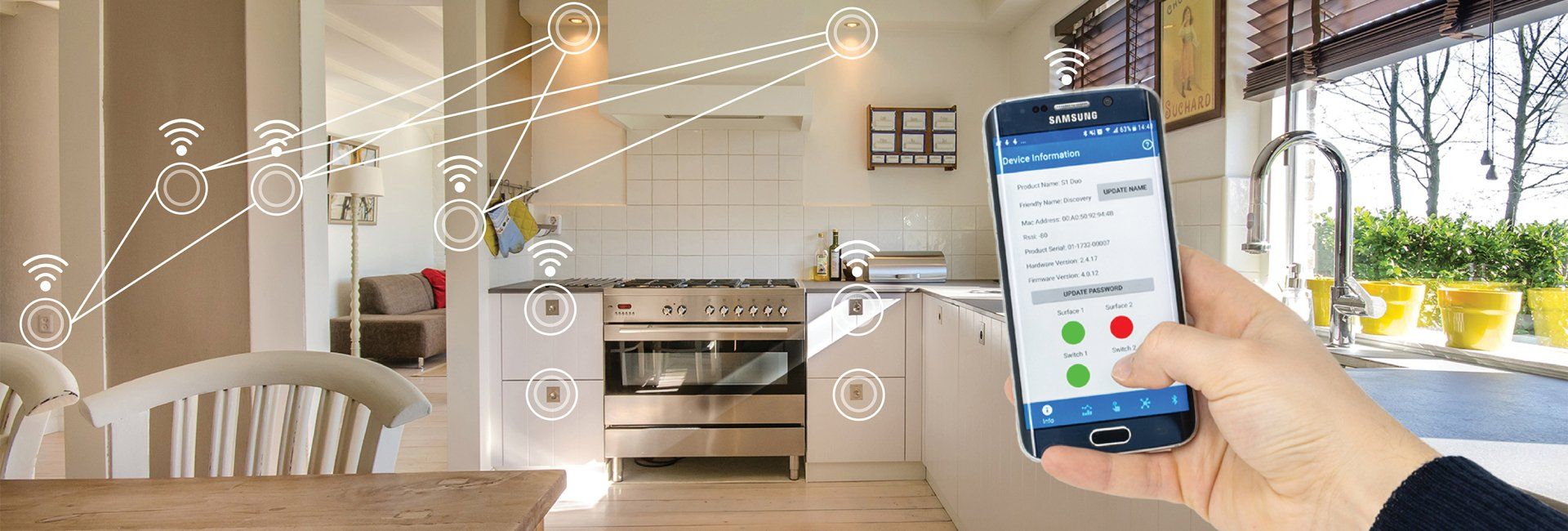
Buildings and homes are continuing to get smarter and, especially with Internet of Things (IoT) technology, are unlocking opportunities that were previously impossible. By interfacing Resene's SmartTouch Paint with intelligent bespoke electronics, an entire world of possibilities would arise. An entire surface or wall would be transformed into a large sensor.
This was the origin of the Smart Paint Switch idea, which would enable the on/off control of mains powered electrical devices. At its most basic application, it would control the lights in a room and entirely replace the need for a physical light switch. By touching anywhere along a wall with specific touch patterns, users would be able to toggle the lights in a room from wherever they were.
Preliminary Design Phase
The first step in the project was to characterise the possibilities of Resene's new paint technology, and create a general product concept and architecture. Research was required to answer some pressing questions:
- What would be achievable with this new paint technology, and equally what would not?
- How would we best sense the user’s touch and what technology would be most appropriate?
- What regulatory compliance aspects would need to be considered?
- What would be the optimum way to connect the paint with the electronic controller?
- Conceptually, what would the product look like?
Through our research, it was discovered that capacitive sensing technology would be used to determine user interaction. Rapid proof-of-concepts were constructed to allow initial testing.

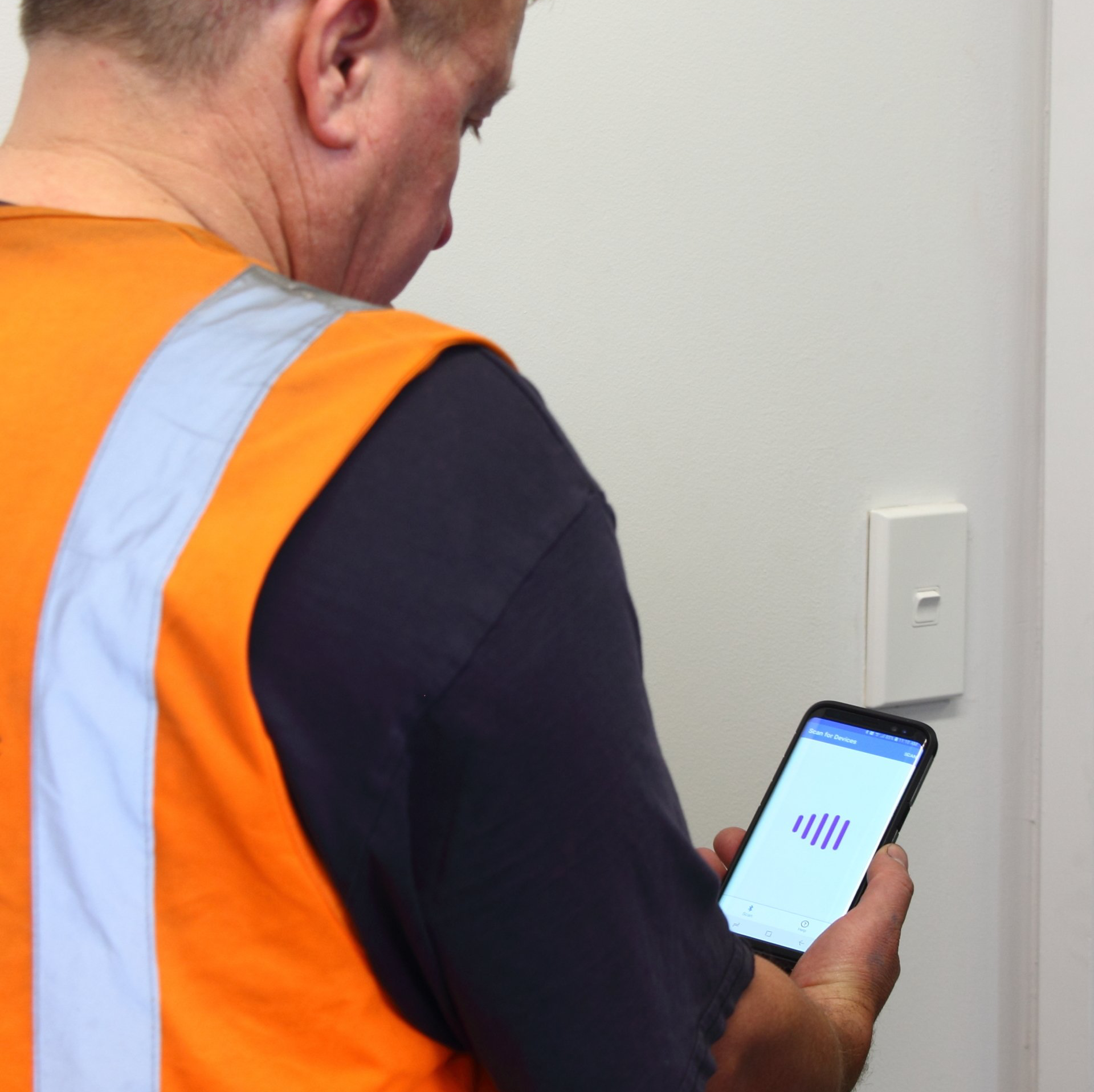
Through this, we were able to better understand the resistivity characteristics of the paint and define maximum usable areas.
Detailed Design Phase
Following the early proof-of-concepts, there was sufficient confidence to proceed to the detailed design phase, whereby the actual final product would be developed.
Electronics Solution
Microcontroller and Sensing Circuitry
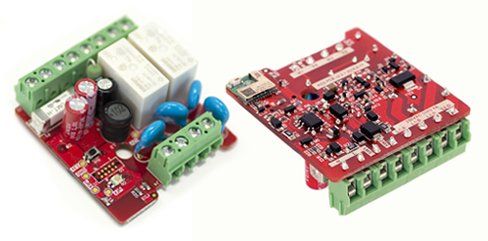
The Smart Paint Switch contains a powerful Cypress microprocessor which acts as the brains of the device. The microcontroller was chosen due to Cypress' leading approach to integrated on-board capacitive sensing technology. The micro is embedded in a module that contains certified wireless circuitry, simplifying the required regulatory compliance testing later in the project development life cycle.
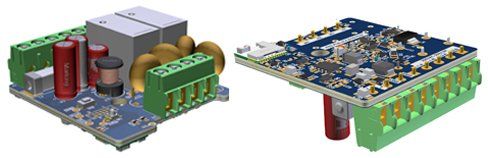
The electronics circuitry (schematics and PCB) was designed and modelled in CAD, which enabled real-time 3D visualisation of the product as it was constructed.
Power Supply and 230V AC Mains Integration
The device was required to be designed to replace a function of a traditional mains light switch, which came with the challenge of keeping the design small enough to fit into existing wall switch installations. The power supply circuitry performs AC to DC rectification and reduces the mains voltage, using energy efficient switch-mode power supplies, to safe levels. The circuit also incorporates electrical isolation between the inputs and the power circuitry, which is good design practice and required to meet regulatory safety standards.
Wireless Communications
The product has been designed to be used in a variety of applications, with each individual user in mind. The firmware is highly configurable, allowing users to change aspects such as tap patterns or fine-tuning sensitivity settings. However, as the switch sits behind a wall, users have restricted access to it. Peer-to-peer wireless communication was the solution, enabling users to connect to any Smart Switch device through their phones without needing to be physically connected to it with cumbersome cables.

Inputs and Outputs
The Smart Paint Switch has been designed with two sensor inputs and two outputs: it can accept inputs from two independent SmartTouch coated surfaces, and control two independent electrical devices. Combined with the programmable number of user taps, the device can be configured in a wide range of ways to meet the specific needs of the customer.
The outputs have been rigorously tested to switch an array of different electrical loads, including LED, fluorescent and incandescent lights.
Electro-Mechanical Solution
Enclosure
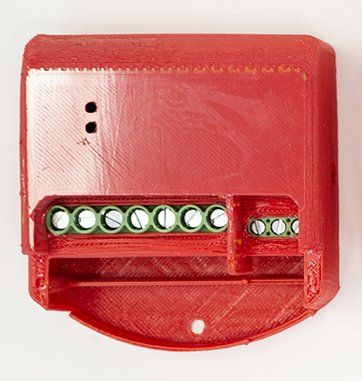
The electronic circuit was housed in a plastic enclosure, which also served to electrically insulate the high-voltage mains within. Beta Solutions designed the enclosure in CAD and iterated through several custom designs through rapid prototyping made possible with 3D printing. At each point the enclosure was designed for manufacture, with the final iteration consisting of only two pieces in order to keep the unit cost as low as possible for injection moulding.

Wall Connection
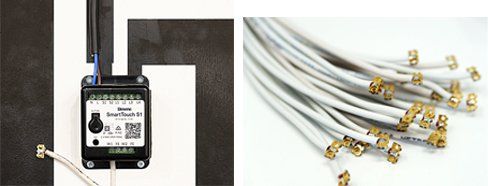
It is essential that the Smart Paint has a strong electrical connection with the Smart Switch electronics. Various options were considered and prototyped, including conductive adhesives and conductive tape. The optimum solution was a short double-insulated cable running between the wall and the Smart Switch. This interlink cable made direct metal connection onto the wall and was secured in place via two small metal tacks.
Firmware Solution
Algorithms
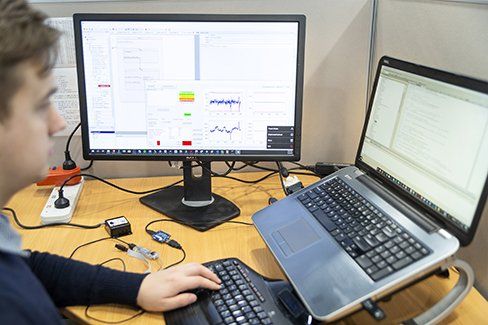
Large wall areas are bound to be touched unintentionally at some point, for example when cleaning or moving furniture. It was essential that the Smart Paint Switch could detect the difference between an intentional user touch and an unintentional one. Software algorithms were developed to look for specific touch patterns (gestures) and to ignore everything else as random noise. For example:
- Two taps on the wall to turn one set of lights on/off
- Three taps on the wall to turn a different set of lights on
- Tap and hold to turn all lights off
The patterns are all user-defined via the smartphone app. These algorithms ensure that lights don't randomly turn on whenever someone (or Tiddles the cat) bumps into the touch sensitive wall.
Signal Processing
In addition to the gesture algorithms, the device incorporates advanced signal processing to reduce electrical noise interference, including digital filtering, edge detection and baseline compensation, ensuring a high signal-to-noise ratio.
Wireless Security
Every Smart Paint Switch device can be encrypted with a unique network password. This password allows units to identify each other and prevents any malicious user from being able to configure your devices.
Over the Air (OTA) Updates
The Smart Paint Switch contains a wireless bootloader, which allows users to update their devices via their smart phones (or a PC), ensuring devices are kept fully updated with the latest software.
Smartphone App Solution
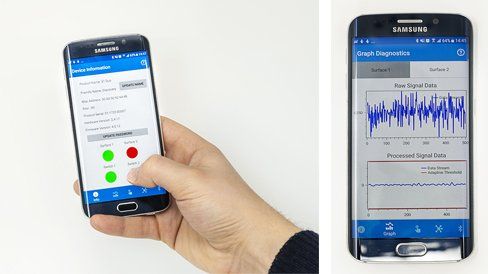
To facilitate the configuration of the Smart Paint Switch, a smartphone app was developed. Beta Solutions worked alongside Resene and a specialist third-party app developer to design a suitable application for both iOS and Android platforms. The smartphone app allows users to easily configure the device, setting parameters such as sensitivity, input/output mapping, and automatic on/off features.
Validation and Testing Phase
All electronics products developed for the market must meet regulatory compliance standards. The design has been optimised through several iterations of both firmware and hardware to meet adaptive client needs, all of which require consideration of various safety and radio certification criteria.
The Smart Paint Switch has been tested by independent laboratories to meet a range of EMC and product safety tests including AS/NZS 60669.1, AS/NZS 60669.2.1, and AS/NZS 4268.

Production Phase
With the detailed design phase and validation and testing phases complete, the PCBs and cabling were moved into the high-volume production phase. This involved generating the final manufacturing source files for both the electronics and enclosure components, and working closely with our trusted ISO 9001 certified manufacturing partners. All devices that passed through the production line were subject to strict quality control. Specifically, each unit was programmed, functionally tested and individually serial-numbered prior to being shipped.
Success
Beta Solutions has been privileged to partner with Resene in the development of the Smart Paint Switch. A truly world-first product has been created, enabling a whole wall to be used as a sensor input to control mains powered devices. As a result of the research and development, Resene has been successful in protecting its intellectual property by way of patenting the concept of touch sensitive control systems for non-electronic display substrate surfaces.
Resene SmartTouch is available in stores and has featured on TVNZ's “Homegrown” and TV3's “The Block 2019”. You can read more about how the paint was used as a design element and how it replaced the need for light switches in this Stuff.co.nz article.
References
- Touch sensitive control system for non-electronic display substrate surfaces. Retrieved from patentscope.
All the content in this article, including imagery, has been approved by our client for publication on this website.