Proof ofConcept
De-risk your project with rapid prototypes.
Some of our clients









Validate before you commit
A proof of concept is a small, focused project to validate that your product idea is technically feasible, before you commit to full development.
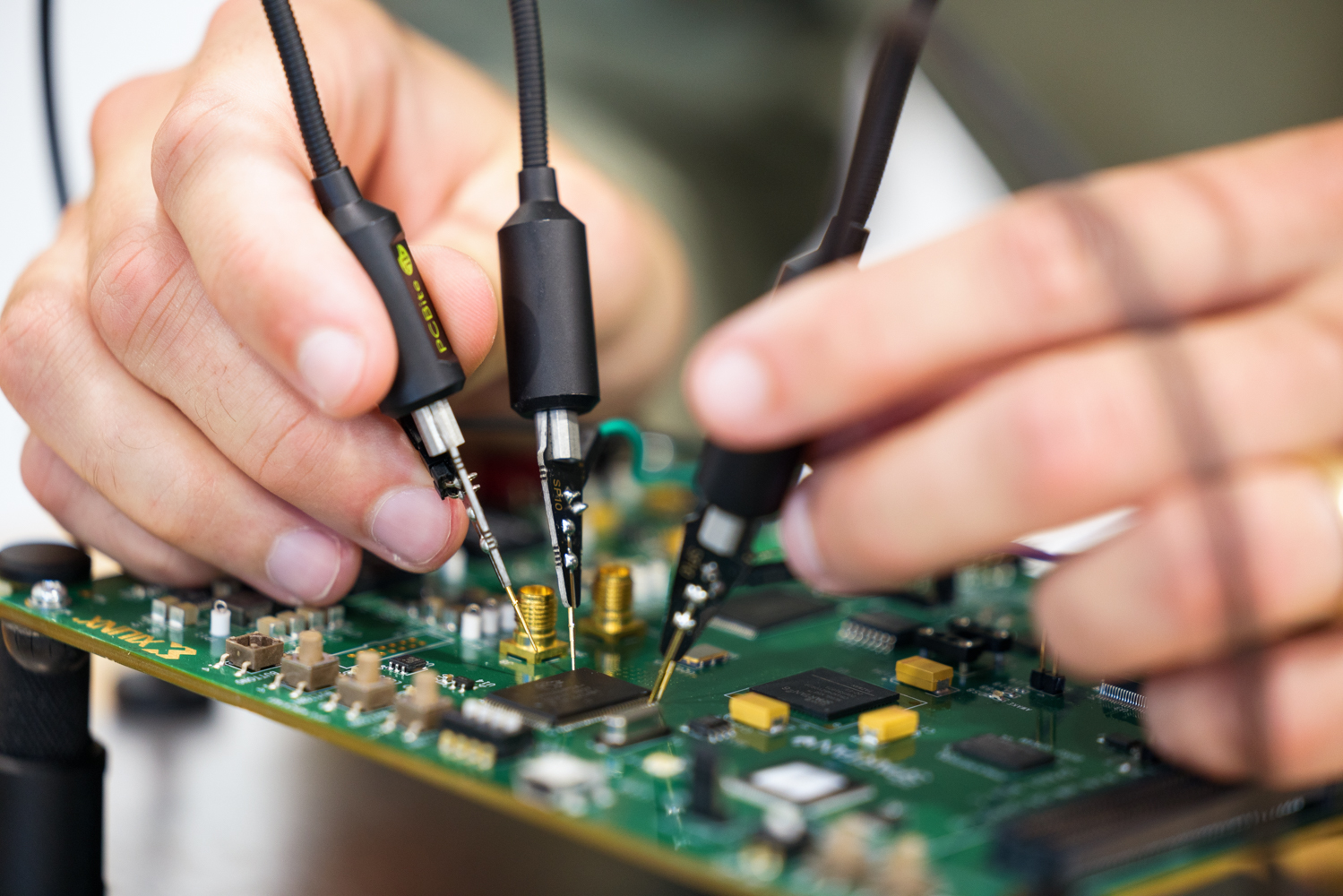
We build functional prototypes that answer the critical questions: Does the technology work? Can we hit the performance targets? What are the real risks?
Possible deliverables include
- Functional prototype hardware
- Technical feasibility assessment
- Risk analysis and mitigation plan
- Ballpark production cost estimate
- Clear recommendation on next steps
Three steps to clarity
Tell us your idea
We discuss what you're trying to build and what questions need answering.
We build a prototype
Rapid-turn hardware, firmware, and testing to validate the concept. Often a few months.
You decide
Armed with real data, you make an informed decision about full development.
Proof of concept questions
Common questions about cost, timelines, deliverables, and when a PoC makes sense before full development.
How much does a proof of concept project cost?
A proof of concept is a smaller, scoped engagement that runs before full development. It's aimed at de-risking the riskiest assumption in your idea. A focused PoC, like a single experiment using off-the-shelf hardware to validate one critical question, starts in the thousands. Most PoCs sit in the high four to low five-figure range. More involved work runs higher. That covers custom hardware, multiple iterations, and system-level validation. Outline the question you need answered and we'll scope a PoC. Get in touch.
How long does a proof of concept take from kickoff to working hardware?
PoC timelines depend on whether custom hardware is needed and how many disciplines are involved. Most PoCs take 2 to 5 months from kickoff to working hardware. Simple builds using dev boards and existing modules can finish faster. For an existing client, we've delivered a PoC for a BLE device with a companion app in under 3 weeks. Not every PoC can move that quickly, and every project is different. Tell us what you need to prove and we'll come back with a realistic schedule.
What is the difference between a proof of concept, a prototype, and a production-ready product?
A proof of concept proves the core technology works. It answers questions like "can we hit the range, accuracy, or power target?" It isn't intended to be aesthetic, robust, or manufacturable. A prototype looks and behaves closer to the final product. It's used for user testing, certification pre-scans, and pilot runs. A production-ready product has been designed for manufacture (DFM), passed compliance (if applicable), and has a locked BOM, test fixtures, and factory documentation. A PoC is the fastest, lowest-risk way to de-risk before committing to a full development programme.
What deliverables do I receive at the end of a proof of concept?
You get functional PoC hardware. Often we also include a proposal on what would need to change to make it production-ready. Specific deliverables are scoped to suit your project.
Who owns the intellectual property in a proof of concept?
Under our standard terms, new IP created during a proof of concept transfers to you on payment. Each party keeps the pre-existing IP they bring to the project. Licensing arrangements apply where third-party components, libraries, or background IP are involved. Specific terms are discussed and defined before the project starts.
Why run a proof of concept before committing to full product development?
A PoC answers the three questions that kill hardware projects. Does the technology actually work? Can it hit the performance targets? What are the real risks? Running a PoC first avoids significantly larger spend on a full development that hits a wall at compliance, manufacturability, or cost. It also gives founders, boards, and investors a working artefact and real data to approve the next tranche of funding.
Scoped to suit your project
Every proof of concept is scoped and quoted after a short discovery conversation. Depending on the nature of the engagement, firm fixed-price or time-and-materials may be possible.
Get a PoC quote
“Beta Solutions were quick to translate our functional requirements into the technical specifications necessary for our prototype. Their technical capabilities were excellent, and we were very happy with the professionalism of their delivery. They achieved all of our requirements and provided full technical documentation to accompany the finished prototype.”Dr Andrew CoyCEO, Magritek
Ready for full development?
If your proof of concept validates the idea, we can take it all the way to production. Same team, no handoffs.
Have an idea worth testing?
Tell us about your idea and what you need to validate. We'll help you scope a PoC that answers your critical questions.
Start a conversation