
What is the chip shortage?
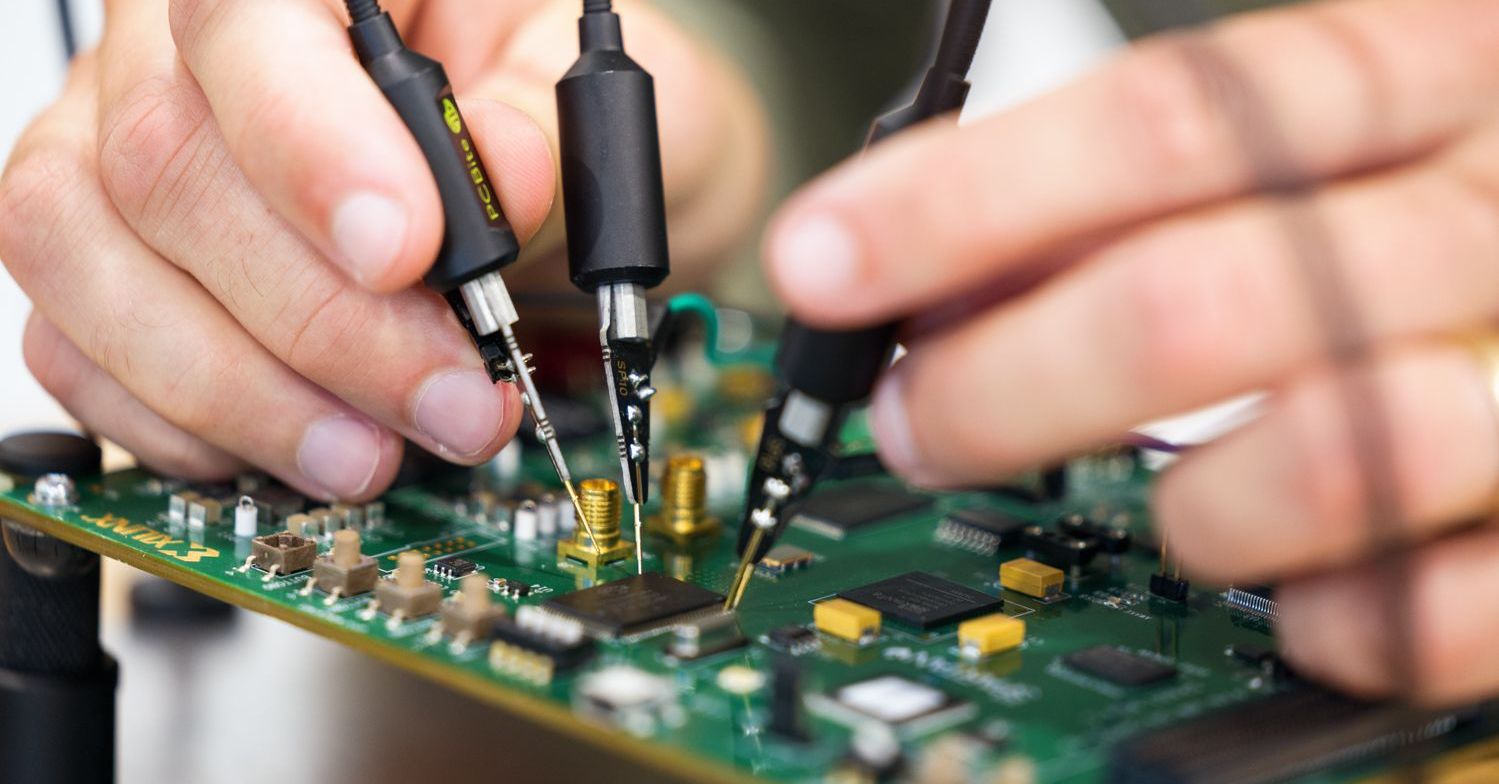
The global chip shortage of 2020-2022 has affected numerous industries and businesses worldwide. Products are becoming harder to source, with prices rising significantly. The automotive sector experienced severe impacts, with examples such as Nissan producing half a million fewer vehicles. Gaming consoles like Xbox and PlayStation, along with PC graphics cards, faced extended wait times and premium pricing. The underlying issue is the inability of integrated circuit supply to meet surging demand.
Where do chips come from?
Integrated circuits appear in virtually every modern device, including refrigerators, microwaves, washing machines, automobiles, headphones, televisions, smartphones, watches, toys, payment terminals, laboratory equipment, and air conditioning systems.
While chips are inexpensive to manufacture at scale, establishing fabrication facilities requires several years and billions of dollars in investment. A limited number of these fabrication plants, or "fabs," exist globally.
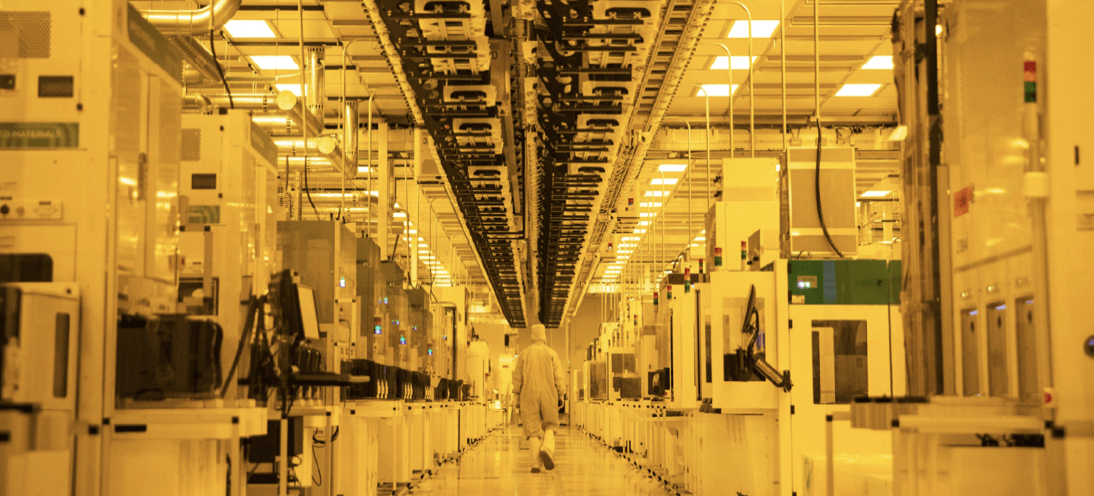
Manufacturing has traditionally followed a lean manufacturing model, often called just-in-time (JIT) production. This approach involves ordering components precisely when needed for production, reducing waste and storage costs. However, it demands a resilient supply chain.
What caused the global chip shortage?
A convergence of four critical problems created what became labeled "The global chip shortage":
- Geopolitical tensions between the United States and China
- Severe weather events and fires at key fabrication plants
- The Covid-19 pandemic, which dramatically increased demand overnight
- Supply chain disruptions in shipping and local deliveries
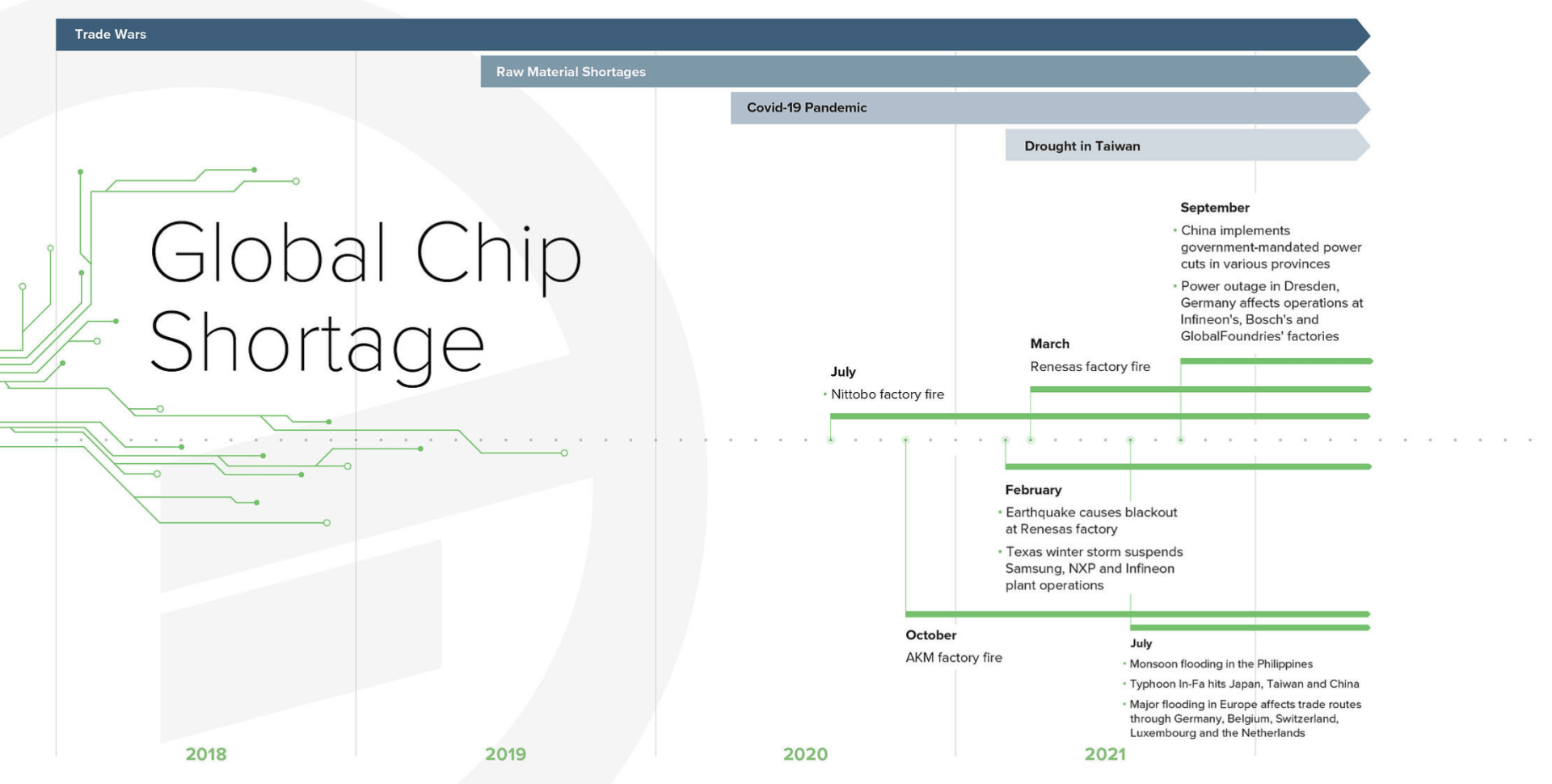
Detailed Analysis of Four Contributing Factors
1. Trade Wars
U.S. President Donald Trump initiated trade tensions with China starting in 2018, implementing a 25% tariff on Chinese imports, including semiconductors and raw materials. Currently, only 5% of U.S. chip imports originate from China, yet imports from other nations haven't compensated for this loss.
In 2019, the U.S. banned semiconductor sales to Chinese company Huawei. This forced U.S. manufacturers to scale back production after losing their primary client, while China began stockpiling inventory. These actions further destabilized global supply chains with lasting consequences.
The Biden administration has maintained Trump-era tariffs while negotiating with other countries to boost semiconductor commodity trade and expand American production capacity.

Additionally, a 2019 Japan-Korea trade conflict emerged when Japan restricted raw materials used in chip production, impacting Korean manufacturers like SK Hynix and Samsung.
2. Disasters
Taiwan Drought
Taiwan, home to TSMC (Taiwan Semiconductor Manufacturing Company Ltd), one of the world's largest chip fabricators, experienced drought throughout 2020. Taiwan typically relies on seasonal wet seasons to replenish water reservoirs, but relief didn't arrive until May 2021.
TSMC consumes 156 million liters of purified water daily. While much is recycled and the company maintained normal production levels, the drought prevented production scaling to meet heightened demand.
Texas Snowstorm
In February 2021, Texas endured unprecedented extreme cold weather. Texas hosts numerous U.S. chip fabs operated by Samsung, Texas Instruments, NXP, Infineon, and others. The severe conditions caused power grid failures and staffing challenges, forcing facilities to either shut down or operate in emergency mode.
Factory Fires
Nittobo suffered a factory fire in Fukushima, Japan in 2020. As the world's leading manufacturer of printed circuit board substrate material, this disaster disrupted supply chains for six months.
In October 2020, a three-day fire destroyed an Asahi Kasei Microsystems (AKM) factory in Japan. This high-end audio chip manufacturer's loss created severe supply problems for audio companies including Solid State Logic, TASCAM, miniDSP, Merging Technologies, SPL, and RME.
A Renesas Japan fabrication plant fire in March 2021 significantly reduced production capacity, though full restoration was achieved by June.
On January 2, 2022, a Berlin fire at an ASML Holding plant caused widespread concern. ASML manufactures lithography machines sold to chip fabs and is the sole supplier of extreme ultraviolet (EUV) lithography equipment.
3. The Pandemic

In late 2019, SARS-COV2 emerged, causing Covid-19, which reached pandemic status in early 2020. Global populations were encouraged to remain home, dramatically increasing demand for work-from-home products such as laptops, webcams, and phones.
Entertainment devices also saw explosive demand, particularly PC graphics cards and gaming consoles. Graphics cards faced additional competition from cryptocurrency miners. Some fabs shifted production toward consumer markets, negatively impacting automotive production.
E-commerce experienced unprecedented overnight growth as public spaces closed. This strained shipping infrastructure, port operations, and last-mile delivery, while port workers and truckers either stayed home or became ill.
4. Shipping and Supply Chain
Global trade in all sectors, including chip manufacturing, depends primarily on maritime shipping and ports. Ships account for 80% of global trade. The system operated at near-capacity efficiency pre-pandemic.
When post-Christmas 2019 demand remained elevated, the system faced mounting strain. The pandemic's global spread caused shipping and dock workers to leave their posts. The e-retail surge created additional pressure on an already stressed industry.
Solutions to the Crisis
New Fabrication Plants
Intel announced in March 2021 plans to build two Arizona fabrication plants at a $20 billion investment.
TSMC is cautiously expanding into the U.S., hiring American engineers and executives for yearlong training in Taiwan before returning to work at new Arizona facilities.
Samsung plans to begin Texas fab construction in the first half of 2022, targeting operational status by late 2024.
Texas Instruments intends to expand current operations with four new fabs at a $30 billion cost.
Additional fabs are under development in Singapore and the European Union as supply chain vulnerabilities become apparent.
Most new facilities are expected to begin production in 2023 or 2024. While encouraging for long-term relief, these timelines offer no immediate solutions.
Expert Predictions
Intel CEO Pat Gelsinger stated: "The global chip shortage is set to last until 2023. Demand continues to soar amid the coronavirus pandemic..."
AMD CEO Lisa Su offered: "The global chip shortage will become less severe in the second half of 2022. We've always gone through cycles of ups and downs..."
Commerce Secretary Gina Raimondo commented: "We aren't even close to being out of the woods as it relates to the supply problems with semiconductors..."
Conclusion
Semiconductor supply challenges, including maxed production capacity, lean manufacturing vulnerabilities, and supply chain fragility, existed well before pandemic-driven demand escalated. A global workforce managing remote work, illness, and isolation significantly impacted supply chains, halting ships, ports, and distribution centers. Combined with droughts and fires, supply-side pressure intensified.
With the U.S.-China trade conflict continuing without resolution, underlying political supply chain issues remain unresolved. The private sector is pursuing geographical diversification as a solution, with East Asian companies building fabs in the U.S. or EU, and vice versa.
The shortage created challenges for businesses globally and locally at Beta Solutions. However, it also generated opportunities to innovate and discover new approaches to mitigate delivery delays and price increases resulting from this global crisis.