

Poor communication is one of the most common and avoidable reasons projects fail. The Project Management Institute found that "ineffective communication is the main cause of project failure about one-third of the time." [1]
It doesn't matter how skilled your engineers are or how strong your idea is. If you can't communicate clearly, execution suffers.
At Beta Solutions, the team has discovered that a few small habits can dramatically improve project outcomes. These changes are simple to implement and deliver results fast.
While the examples here focus on written communication (Slack, Teams, or email), the principles apply to other forms too.
Habit 1: Address Your Messages to a Single Person
It's tempting to drop a message into a group chat and hope the right person picks it up. The problem is that when responsibility isn't clear, it's often ignored. Tagging the whole team does not make something urgent. It makes it no one's job.
Bad Example
When you send a group message without naming a single person responsible, you create uncertainty. Everyone sees it, but may assume someone else will handle it. In many cases, no one does or it gets picked up far later than it should have been.

Why this is bad:
- Creates diffusion of responsibility, also known as the "bystander effect" (in chat form)
- Slows decisions and handovers
- Leaves the sender wondering if anyone has even seen the message
- Can lead to frustration or blame that could have been avoided
Good Example
When you tag a single person and clearly state what you need, there is no doubt who owns the task. Others can still be tagged for visibility, but they know they are not expected to act. This same principle applies in email. For example, starting with "Hi Jason (cc: Morten & Jono)" makes it clear Jason is the one being addressed, while noting others have been copied for awareness.

Why this is good:
- One clear owner knows they must act
- Others tagged understand they are for awareness only
- Speeds up response times
Key takeaway: Always hand the "baton" to one person. Others can still be tagged for visibility.
Habit 2: Number Multi-Part Questions
Long, unstructured messages with multiple questions are a recipe for miscommunication. Even with the best intentions, people tend to answer what is easiest or most recent and skip the rest. Numbering questions makes it easy for the recipient to respond to each one, and for you to check nothing has been overlooked.
Bad Example
When multiple questions are buried in one sentence or paragraph, people skim and latch onto the part that stands out to them. This leads to partial answers, confusion about what "yes" or "no" refers to, and more follow-up messages just to clarify.
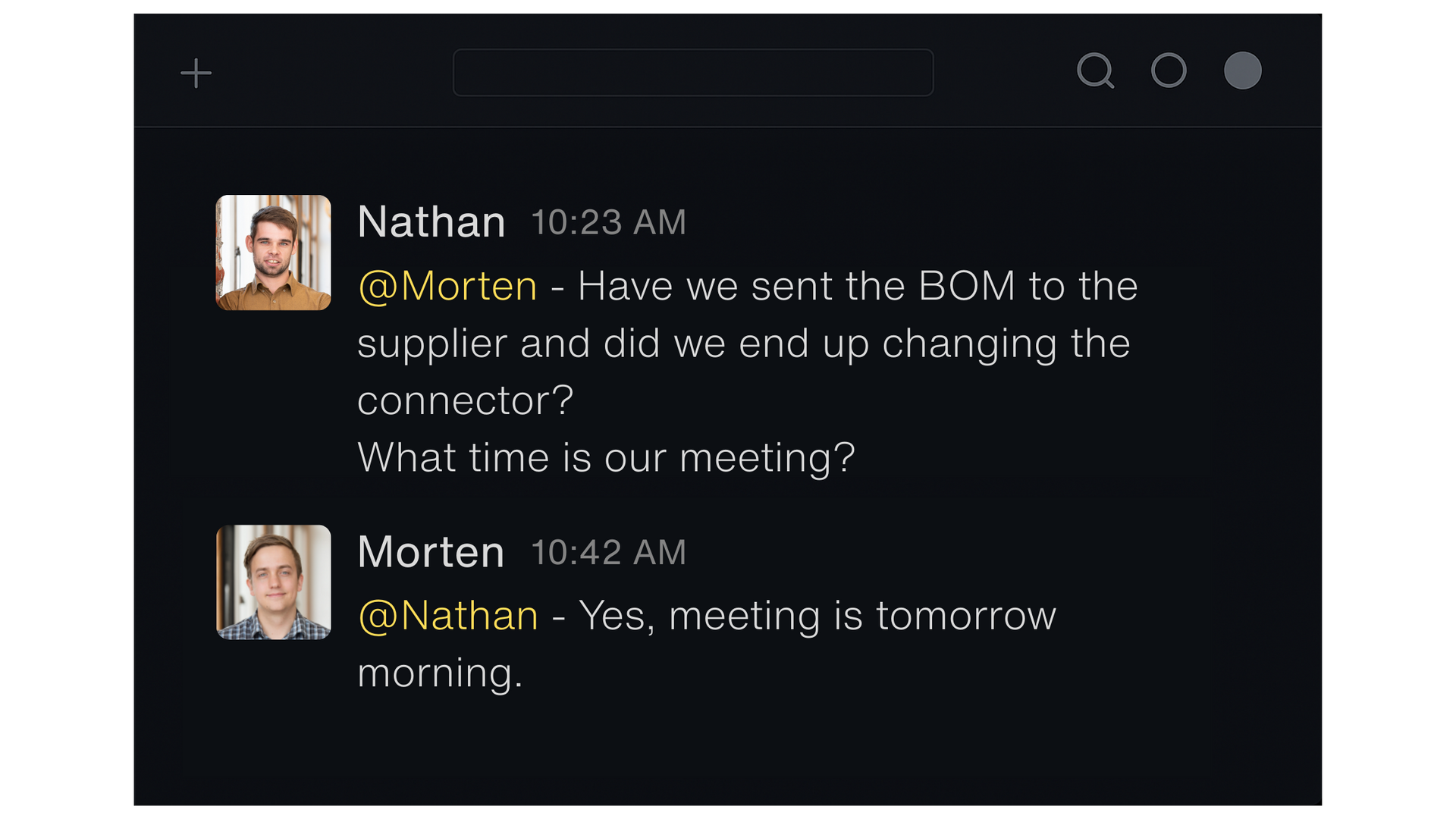
Why this is bad:
- Replies may skip points without anyone noticing
- "Yes" or "No" answers become ambiguous
- Makes it harder to revisit decisions later in the thread
- Creates extra back-and-forth just to clarify what was meant
The fix is simple. Give each question its own number. This creates a structure that is easy to respond to and impossible to misinterpret.
Good Example
Numbering your questions forces clarity. It helps the recipient reply in a structured way and makes follow-up changes quick and precise.
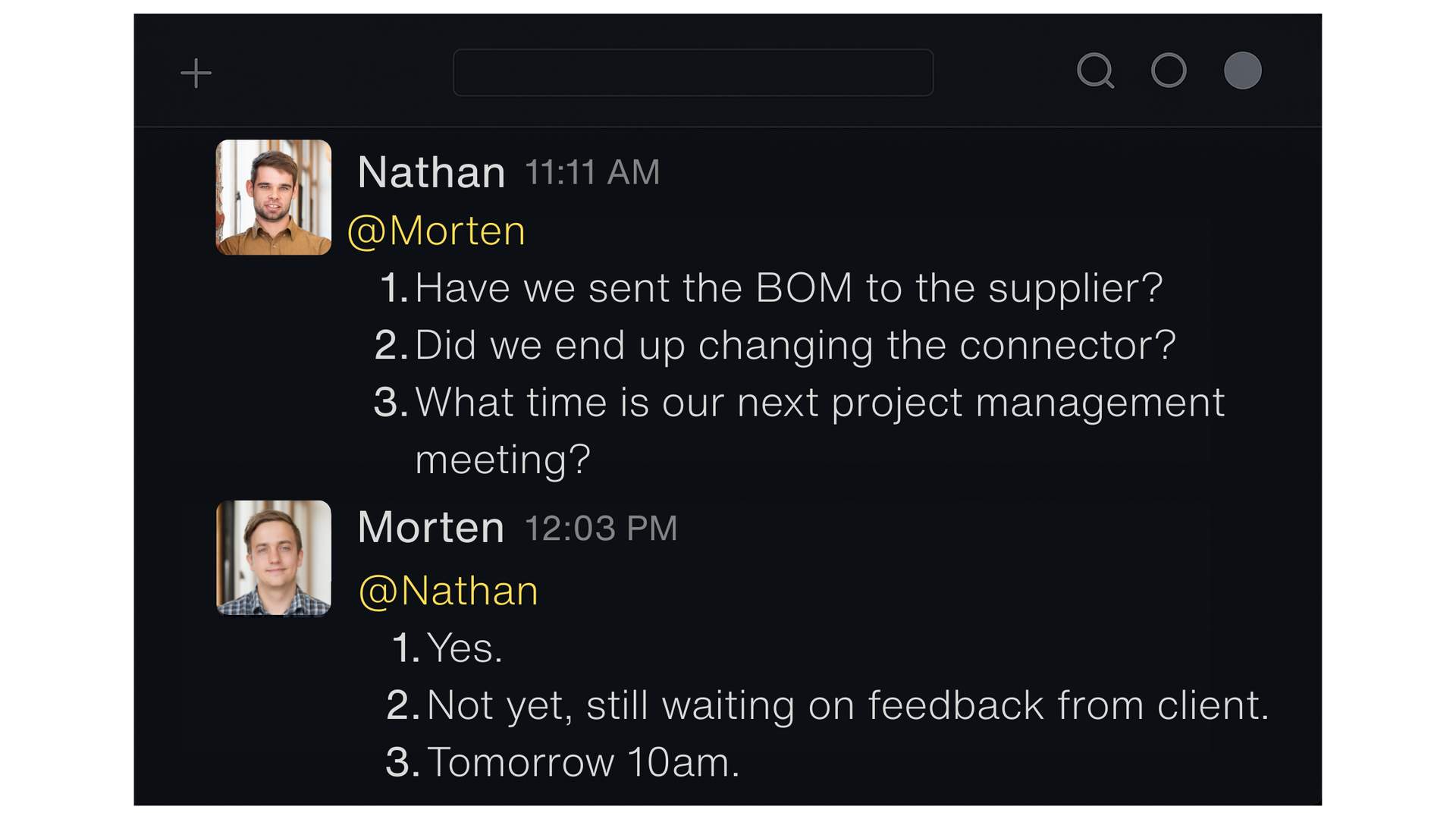
Why this is good:
- Keeps questions and answers aligned, making it easy to match reply to question
- Makes follow-up fast. For example, "3. Can we make that 10:15am" instantly tells the recipient exactly which point to adjust without re-reading the whole conversation
- Improves accuracy when multiple people are involved in a reply
- Works especially well for asynchronous communication where hours or days pass between messages
Key takeaway: If you ask multiple questions, make it easy for the other person to give you multiple clear answers.
Habit 3: Respond Even If You Don't Have the Answer
This might sound counterintuitive, but if you are unable to provide the full answer in a reasonable timeframe, respond anyway.
Silence creates uncertainty. If someone is waiting on you, even a quick acknowledgement shows you have seen their message and are working on it. You do not always need the final answer right away.
Bad Example
People often have the right intention by waiting to reply, but this can create unnecessary delays. Silence to the person asking can feel frustrating and create uncertainty. A quick acknowledgement closes the loop and reassures the sender you're on it.

Good Example
This may not be the answer the sender ideally wants. In a perfect world, you'd just get it done straight away. But that's not always doable. This sets clear expectations and keeps everyone aligned.

Note: It goes without saying. If you tell someone you'll get back to them by a certain time, you need to keep your word and follow through.
TLDR
When sending a message, get into the habit of:
- Tagging one person to assign the baton of responsibility to someone
- Numbering your points to bring clarity and readability to your message
When replying to a message, get into the habit of:
- Responding promptly, even with partial info, to close the loop quickly
- Using numbers to structure your reply for clarity and readability
- Checking your messages regularly to avoid delays
References
[1] Project Management Institute. (2017). A Guide to the Project Management Body of Knowledge (PMBOK Guide) (6th ed.). Newtown Square, PA: Project Management Institute.