Introduction
Motor racing has transformed dramatically. Formula E (FE) represents a fully electric single-seater racing series competing on street circuits worldwide. Since its 2014 inception, the sport has experienced rapid growth in both viewership and manufacturer participation. The series approaching its fifth season features automotive giants including BMW, Audi, Nissan, DS Automobiles, Mahindra, and Jaguar, with Porsche and Mercedes joining by 2019's end.
What is a Formula E Car?
Exterior Design
Formula E vehicles resemble traditional single-seater race cars with front and rear wings, open cockpits, and central roll hoops. However, their aerodynamic philosophy differs fundamentally from Formula One. While F1 prioritizes generating downforce, FE emphasizes drag reduction to preserve energy, reflecting the core challenge of electric racing.
Critical Electrical Components
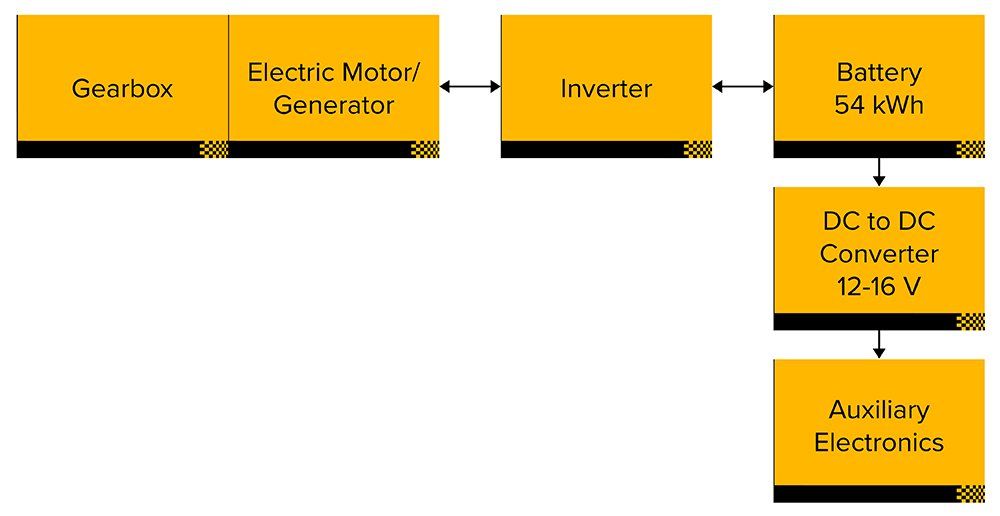
Formula E cars contain four essential electrical systems:
Electric Motor/Generator: Propels the vehicle during acceleration and recovers energy during braking through Permanent Magnet Synchronous Motors (PMSM), similar to brushless DC motors.
Inverter: Converts DC current from the battery into three-phase AC current, controlling motor speed based on driver input.
DC to DC Converter: Transforms 500 VDC battery voltage into usable 12-16 VDC for auxiliary systems, sensors, and steering wheel computers.
Battery: Stores electrical energy for propulsion and onboard systems. This standardized component is FIA-supplied (Williams Advanced Engineering for seasons 1-4; McLaren Applied Technology from season five onward).
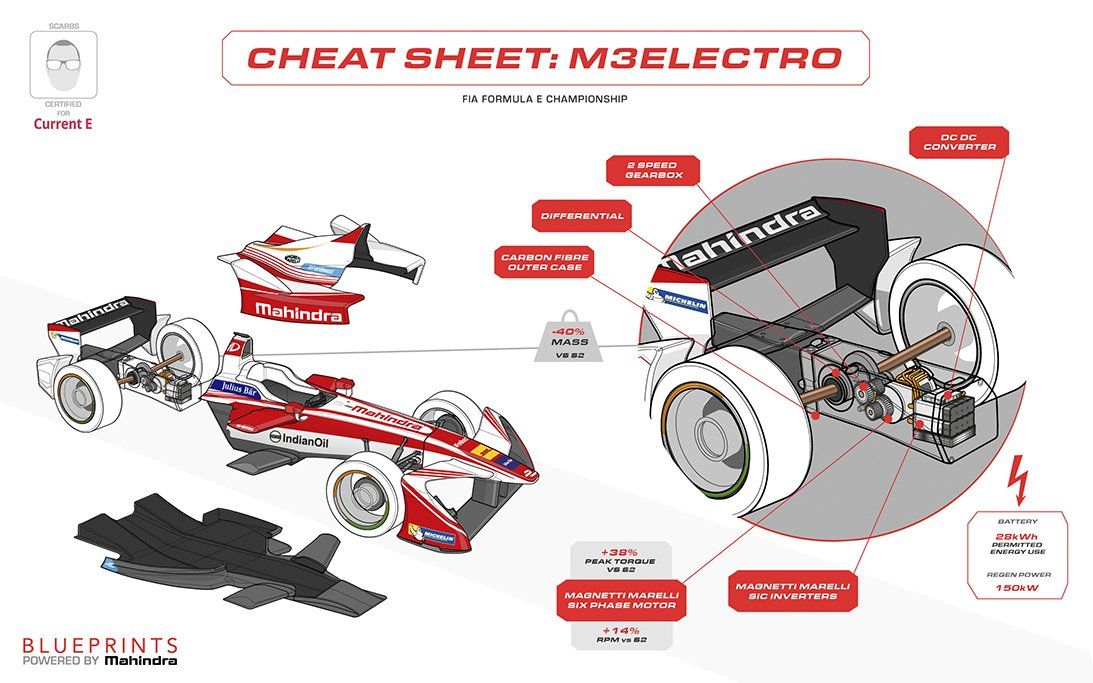
Formula E Technical Evolution
Gen 2 Specifications
Generation 2 cars (season 5 onward) underwent significant technical overhaul. The most transformative change was eliminating mandatory mid-race car changes. Gen 1 cars (28 kWh batteries) couldn't complete races without swapping fully charged vehicles. Gen 2 increased battery capacity to 54 kWh, enabling single-car racing, though battery weight rose from approximately 200 kg to 385 kg.
Energy density improvements remained modest: approximately 140 Wh/kg (Gen 1) to 140.2 Wh/kg (Gen 2) over five years.
Regenerative Braking Advancement
Gen 2 regulations increased regenerative braking power by over 60 percent, from 150 kW to 250 kW. This enhancement allows vehicles to recover energy at higher rates than acceleration allows (250 kW recovery versus 200 kW acceleration), potentially recovering roughly 1 kWh per lap, representing approximately 50 percent energy recovery per race.
Technology Transfer, From Track to Road
Battery Development Limitations
The standardized battery requirement presents challenges for road-relevant technology transfer. Since identical batteries supply all teams, individual manufacturers cannot develop optimized solutions. This regulatory approach stifles battery technology progress. The current Gen 2 batteries possess approximately 1 percent the energy density of petroleum fuel, a significant disparity even accounting for electric motors' superior efficiency (80-90 percent versus 20-35 percent for combustion engines).
The regulations restrict team battery development until at least 2025, limiting near-term advancement in this critical area.
Power Electronics Success
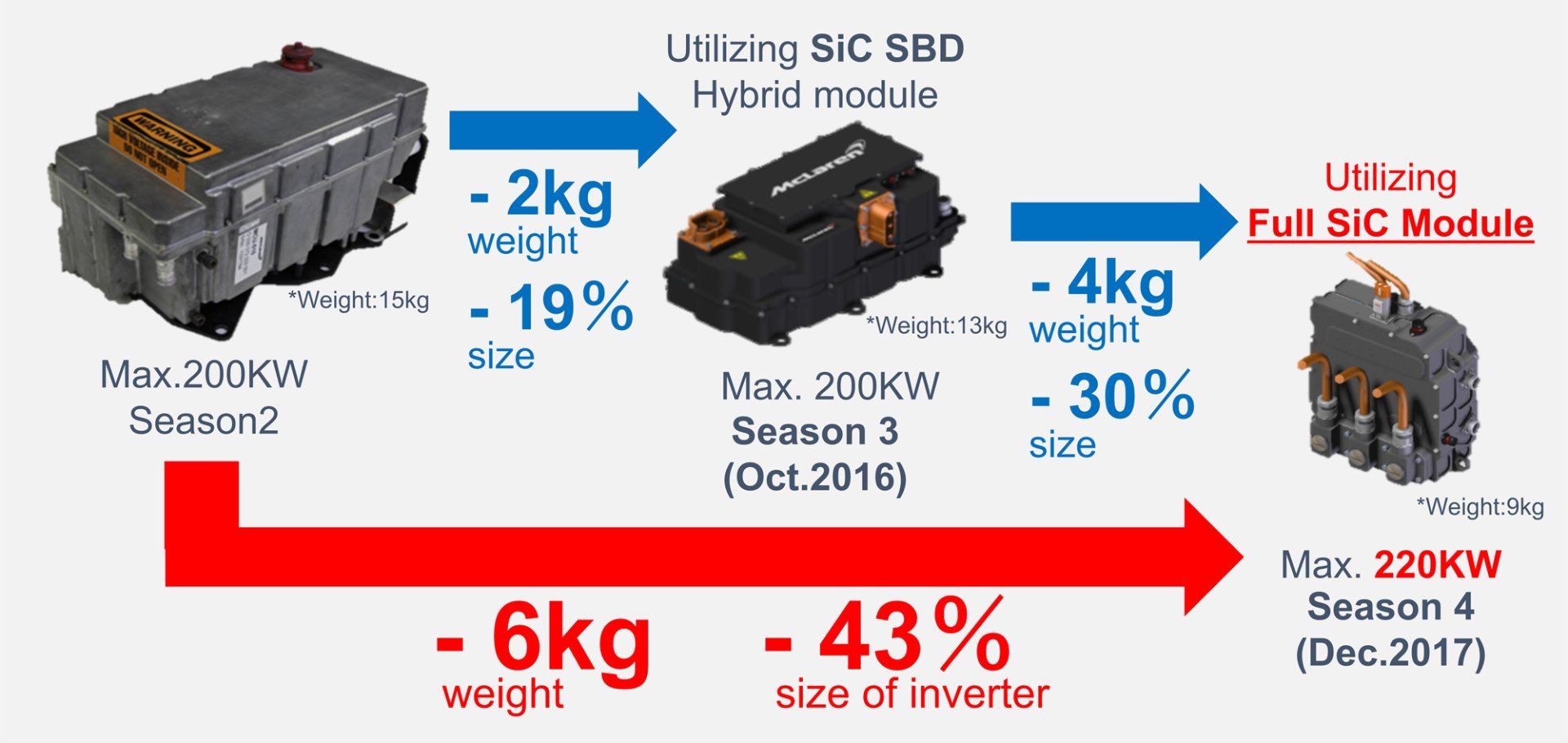
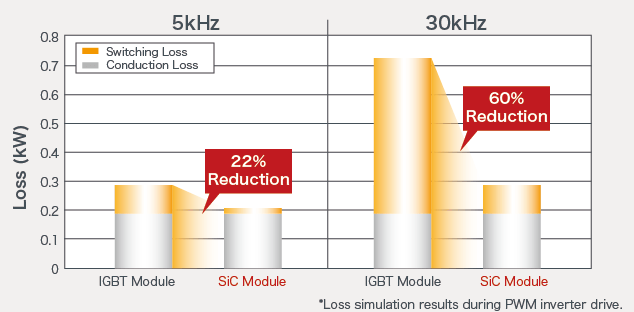
The open regulations governing drivetrain and power electronics have yielded substantial improvements. Teams partnering with semiconductor manufacturer Rohm have achieved notable gains in inverter packaging, weight reduction, and energy efficiency through silicon carbide (SiC) MOSFET development.
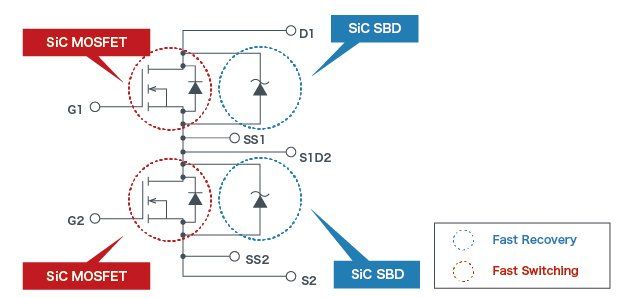
Season 3: Hybrid solutions combined standard silicon IGBTs with SiC Schottky Barrier Diodes, reducing switching losses and package size.
Season 4: Full SiC modules incorporating both SiC MOSFETs and Schottky Barrier Diodes further reduced high-speed switching losses, improving efficiency and compactness.
Conclusion
Despite areas requiring improvement, particularly opening battery development, Formula E represents a racing series with substantial momentum. The sport gains traction among fans and manufacturers, promising continued technological advancement and electrification innovation.