
Can you afford NOT to invest in innovation?
Being new product developers in the high-tech electronics field, we have a front row view into how disruptive, emerging technologies open up new possibilities and change industries. Seemingly overnight, established industries and the companies in them become obsolete or left behind when they do not invest in innovation.
Perhaps this is why Apple Inc. continues to increase their spend on R&D (spending over US $10B in R&D for 2016) as they look for other products and industries to broaden their product portfolio and lessen their dependence on the iPhone for growth.
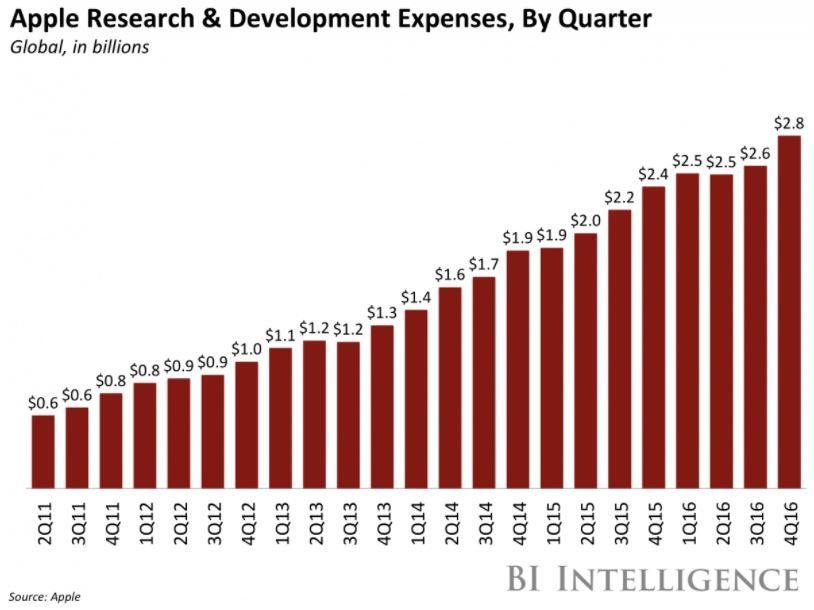
Figure 1: Apple Inc. Research and Development Expenses, by Quarter - Globally, in Billions.
Innovation is not always about spending money on the next big idea. Investment in new technologies can improve productivity and profitability by:
- Improving efficiencies, saving time on labour or production
- Improving product costs
- Updating existing products to close the competitive gap or gaining the leading edge in your market
Plan for Innovation Investment with an Innovation Budget

Here are some helpful tips we came across that could help your business plan for innovation:
1. Establish a Strategic Innovation Roadmap
As companies start to get to grips with the way rapid innovation is shifting the landscape of markets, more and more are moving towards an agile approach in various departments, from strategic goal setting, marketing methodologies, to even financial planning.
Corporate strategies can thus no longer be strictly linear, as it has to allow for agile possibilities that come with new technologies such as Augmented Reality, Artificial Intelligence, Internet of Things, Precision Farming, to name a few. These technologies can at any time change the customer requirements of current products or alter the scope of existing new product development projects.
A strategic innovation roadmap is thus a guide that aligns innovation efforts to a company's long-term goals whilst allowing the flexibility to react to and budget for uncertainties and risks as they arise. This ensures the required nimbleness to capitalise on new opportunities.
2. Change your Budgeting Approach
One thing is clear, traditional budgeting processes are rigid in nature and can not be used to plan for innovation investments that require agility and speed in responding to new developments in technology.
The flexibility of a responsive budget process is required in order for a company to allow innovation to succeed. Such allowance can be in the form of building in contingencies for either under or overestimation in the uncertain realm of emerging technologies where there is no historical knowledge to draw from.
How you measure innovation investment is also important because it is an experimental approach to learning, charting new territory with unpredictable outcomes. Transformational innovation mostly follows a J-curve pattern and is not comparable to traditional linear growth patterns that investments are normally measured against.
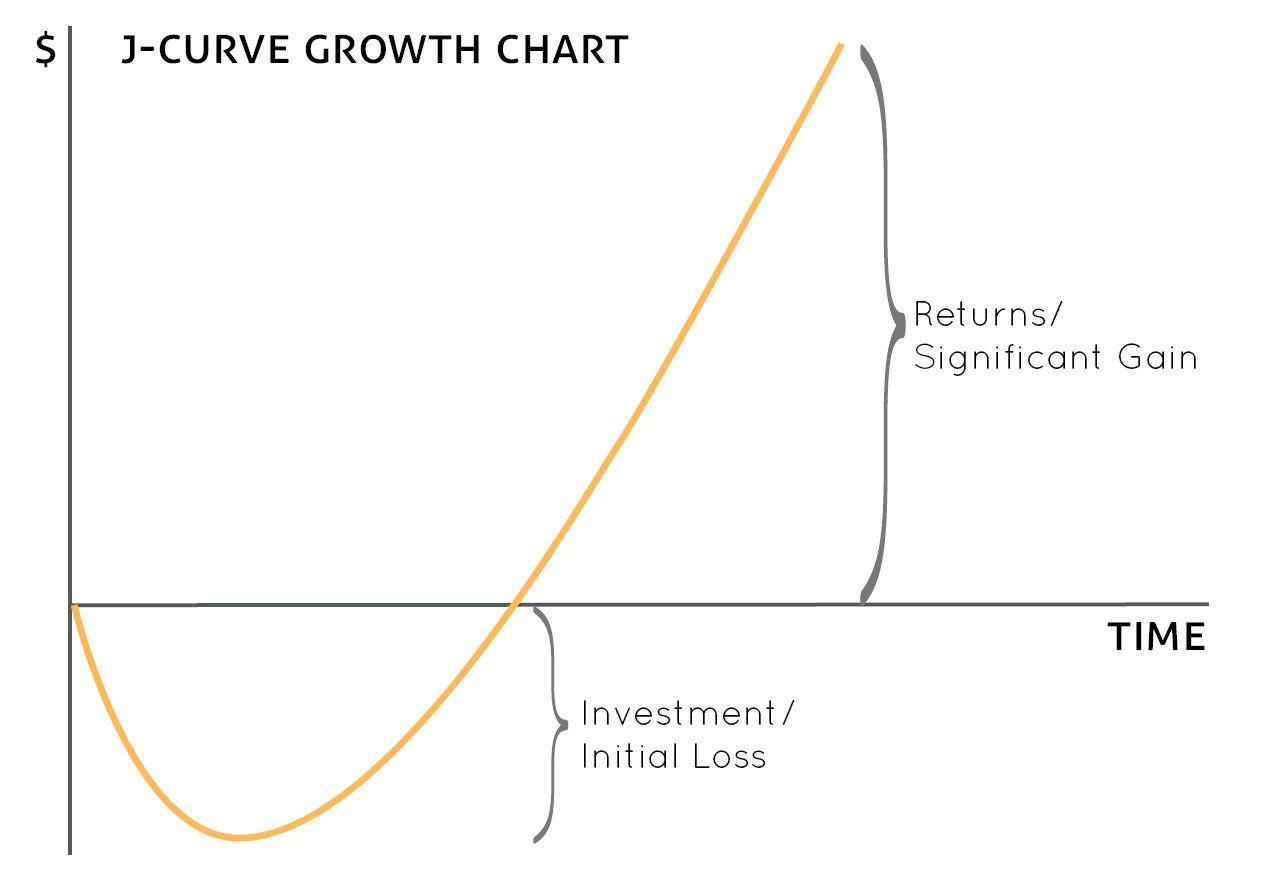
Figure 2: J-Curve Growth Chart Associated with Transformational Innovation.
3. Set Aside an Innovation Budget
An innovation budget is crucial in giving companies the freedom to experiment with and benefit from new technologies with the speed and agility required to succeed ahead of the competition.
However, even more important, it facilitates a mindset of innovation and willingness to change that creates a corporate culture of forward thinking that can set you apart from your competition.
Be sure to know what the budgeted split of funds (and resources) are between operational expenses, continuous improvement activities, and disruptive innovation. Challenge this split of investment in its ability to ensure future value creation. Also ensure that innovation budgets are protected from being pilfered by revenue-producing parts of the business.
Conclusion
As emphasized by thought leaders in technology, success stems from prioritizing people, leadership quality, and cultural alignment alongside financial investment. Sustainable innovation requires:
- Adaptive management practices like responsive budgeting processes that enable organizations to capitalize on opportunities with emerging technologies
- Individuals whose knowledge and skills keep pace with technological advancement
- A business culture that enables company-wide idea generation, tolerance for risk, and learning from failures
"Transform or perish" is a reality, and investing in innovation is no longer optional but essential for survival.
We are happy to discuss our flexible and proven innovation process and project estimation techniques (designed to help minimise risk for our clients) with you in a free 1-hour consultation.