
The New Mesh
Traditional communication relies on point-to-point connections or central routers. Mesh networks differ fundamentally, devices act as relays, allowing data to travel through multiple nodes to reach destinations. This distributed approach defines the Internet of Things landscape.
Bluetooth Mesh implements this protocol using existing Bluetooth LE hardware. Future smartphones will likely support mesh connections, potentially eliminating the need for dedicated hubs in smart home setups. However, network implementation introduces complexity, particularly regarding security through authentication, pairing, and provisioning protocols.
1. Bluetooth Mesh Topology
Bluetooth Mesh operates as a flood mesh. When transmitted, all relay-configured devices retransmit messages across the network. Messages are limited by "Time To Live" (TTL), up to 127 hops theoretically, extending Bluetooth LE range dramatically.
Nodes support four key features:
- Relay Feature: Retransmits received messages via advertisement bearer
- Proxy Feature: Enables message retransmission through GATT bearer, allowing smartphones to communicate with mesh networks
- Low-power Feature: Operates at minimal power; requires a "friend" node to store messages
- Friend Feature: Stores messages for low-power nodes, forwarding them upon request
Proxy nodes contain standard Bluetooth LE GATT services. Low-power nodes negotiate "friendship" with friend nodes, enabling extended battery life through receiver shutdown during inactive periods.
2. Bluetooth Mesh Messaging
The mesh abandons the traditional GATT model, implementing "elements" instead. Each element contains one or more models that determine node behavior; states define current conditions.
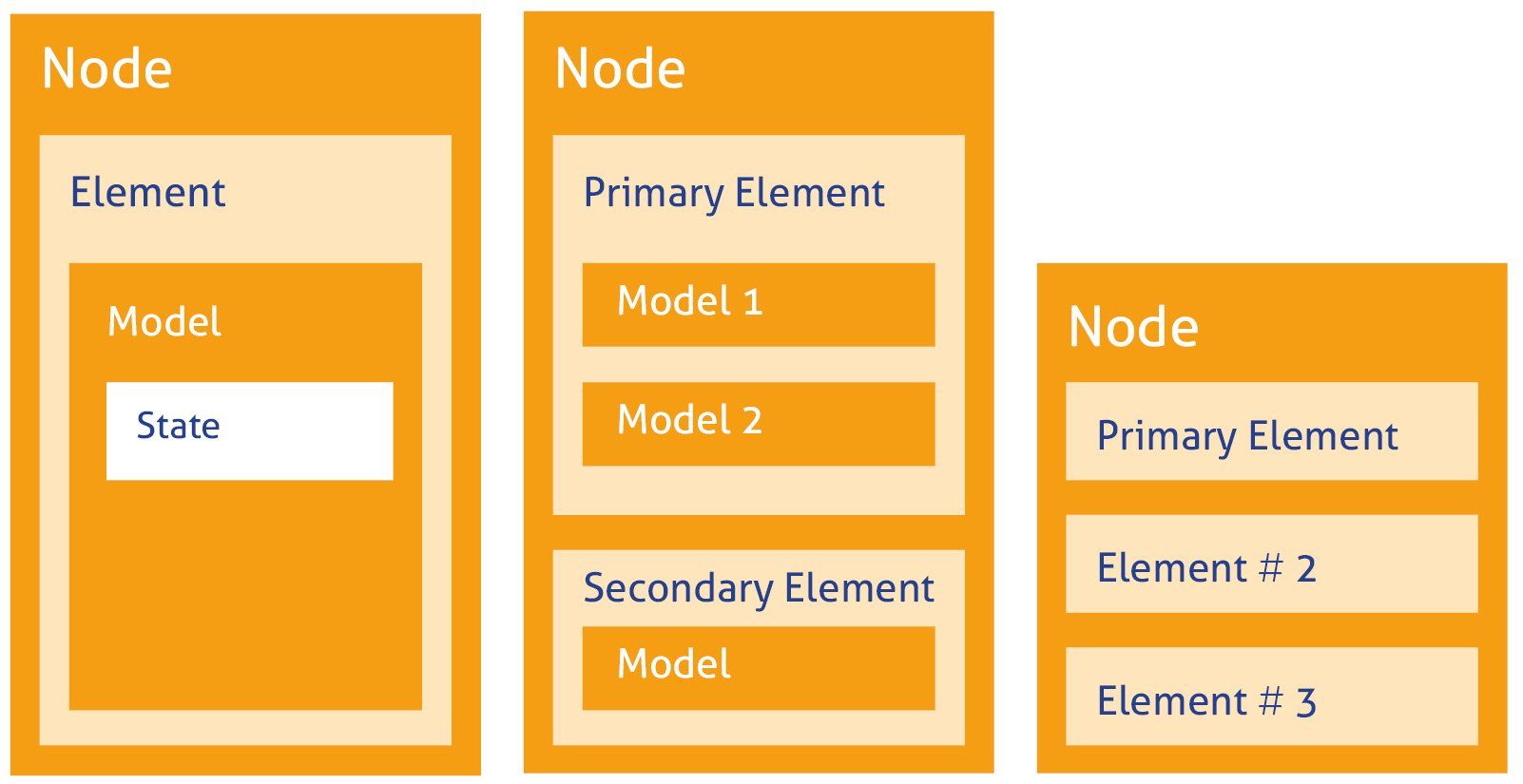
Example: A smart lightbulb might include:
- Generic lightbulb element
- On/Off model (boolean state)
- Brightness model (0-10 value range)
- Optional temperature elements
States can bind together, brightness adjustment automatically activates the lightbulb.
Communication uses familiar client-server architecture. Clients read or write states; servers respond based on model definitions. A publish-subscribe mechanism allows devices to publish to addresses; subscribed devices receive messages. Messages may be acknowledged or unacknowledged.
Two message types:
- Control Messages: Heartbeats and friend requests
- Access Messages: State retrieval, setting, and reporting
Addressing options:
- Unicast Address: Unique per element; enables point-to-point communication
- Group Address: Groups multiple elements across devices (e.g., by room or floor); includes predefined addresses like "All Proxies" and "All Nodes"
- Virtual Address: Hashed Label UUID addresses; vendor-specific for identifying proprietary devices
Elements begin unassigned. Provisioners assign addresses during network establishment; unassigned elements cannot communicate.
3. Security of the Bluetooth Mesh
"Provisioning" adds or removes mesh devices. Beacon-advertising devices broadcast join intentions; provisioners scan, extend invitations, and initiate pairing similar to standard Bluetooth LE, involving key exchange and authentication based on device capabilities.
Three key types provide layered security:
- Network key: Shared across all mesh devices for universal transmission/relay
- Application key: Enables "Separation of Concerns", lightbulbs ignore door lock message content; relays retransmit without decryption
- Device key: Unique per device-provisioner pair
The specification protects against:
- Replay attacks: Sequence numbers increment with each message. Recipients validate incremented counts; previously-sent messages become invalid
- Man-in-the-Middle attacks: Out-of-Band authentication, passkey validation, and Elliptic Curve Diffie-Hellman protocol prevent attacker interception
- Trashcan attacks: Provisioners blacklist discarded devices and redistribute network/application keys. "Phase 2" maintains old key validity temporarily while devices receive updates; subsequently, old keys expire
Comparison with Alternative Technologies
Bluetooth Mesh targets smart home lighting initially. The Bluetooth SIG specifies device standards ensuring interoperability and future compatibility.
However, ZigBee and Z-Wave already dominate the market. WiFi, Thread, and others also compete.
ZigBee
Pros:
- Exceptional scalability
- Very low power consumption
- Well-established market support
Cons:
- Requires network coordinator (single failure point; newer versions support distributed models)
- Inconsistent manufacturer compliance reduces interoperability
- Security vulnerabilities from non-standard implementations
Z-Wave
Pros:
- Operates outside congested 2.4GHz band
- Requires Z-Wave Alliance membership; guarantees testing and security
- Low power consumption via efficient routing tables
Cons:
- Requires primary controller
- Country-specific frequency variations limit universal compatibility
- Higher costs than alternatives
- Supports only 232 nodes
- Lengthy development timelines due to Alliance testing requirements
- Slower data rates
WiFi
Pros:
- High bandwidth for streaming
- Integrates with smartphones, tablets, PCs
Cons:
- Extremely power-hungry; batteries need frequent replacement
- Direct internet connectivity creates remote hacking vulnerabilities
- Complex initial setup requiring custom password/network data transfer
- Requires dedicated routers and network extenders
Bluetooth Mesh
Pros:
- Supports up to 32,767 devices
- Well-defined standards ensure interoperability and future-proofing
- Existing Bluetooth LE hardware (including smartphones) requires only software updates
- Extended range between nodes
- Relatively high data rates (insufficient for audio streams)
Cons:
- Existing smart home hubs lack universal Bluetooth LE support
- Complex setup requiring understanding of node functionality
- Emerging technology with unknown compatibility risks
- Flood mesh wastes transmissions in larger networks; relays require power or frequent battery replacement
Conclusion
Bluetooth Mesh presents a competitive IoT protocol offering security and scalability for home and industrial applications. Yet ZigBee and Z-Wave already command the smart home market.
The mesh's topology complexity may deter new automation adopters unfamiliar with node features. However, Bluetooth's ubiquity offers substantial advantage, existing devices potentially gain mesh functionality through software updates.
Major Bluetooth players already provide modules and software support. Smartphone mesh integration likely approaches. The protocol's adoption trajectory remains fascinating as it competes in an established ecosystem.