Introduction
According to a United Nations Report, the world's population is expected to reach 9.7 billion people by 2050, and crop production would need to double to feed that population. With climate change and a growing global population, farmers are increasingly adopting technology, known as Agriculture 4.0, to achieve higher productivity, improved yields, better harvest quality, and sustainability.
The New Zealand government defines Agritech as:
"The 'agritech' sector refers to manufacturing, biotech and digital-based technology companies that are creating product, service, IP and value chain solutions for the agriculture, horticulture, aquaculture, apiculture and fishing sectors, with the aim of improving yield, efficiency, profitability, sustainability, reliability, quality or adding any other kind of value."
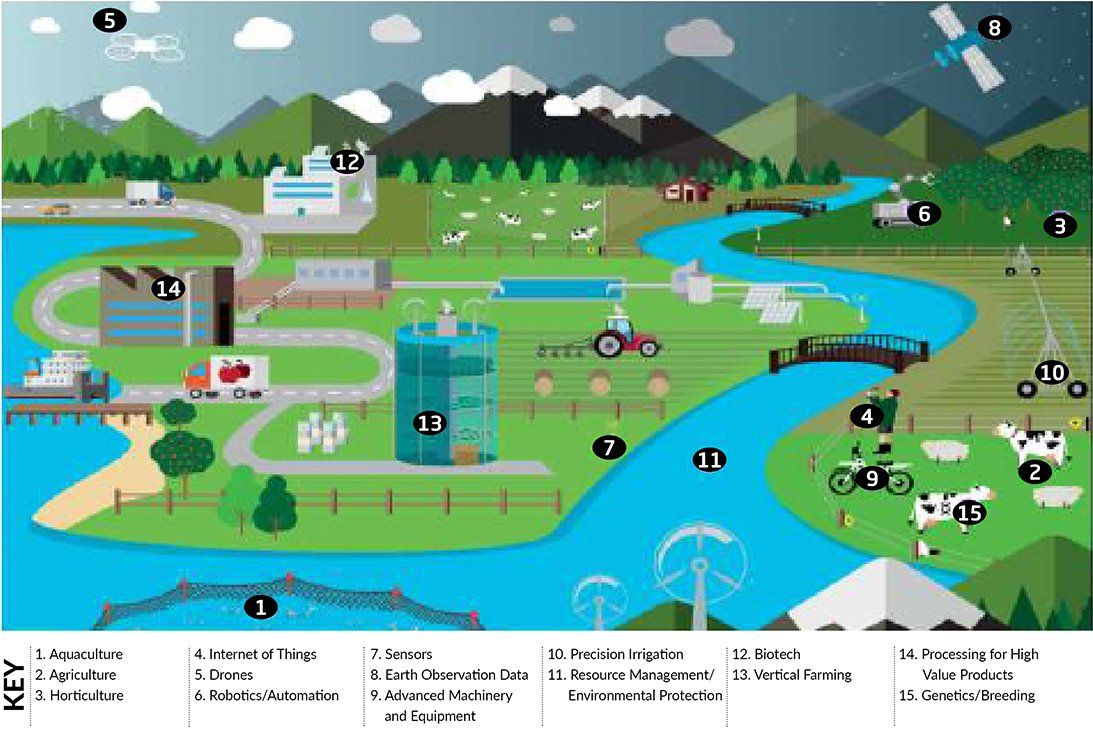
Agritech spans multiple industries, with hardware including robotics, sensors, cameras, and drones, while software enables data collection and interpretation for real-time decision-making.
Agricultural Robotics
The Global Agriculture Robots Market is projected to reach USD 11.58 billion by 2026. Agbots are automating labor-intensive processes while collecting data for crop development and management.
Root AI's Virgo tomato harvester exemplifies this innovation, using a customized neural network to detect ripe fruit and harvest without damage.
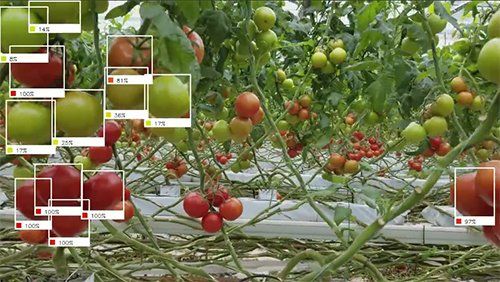
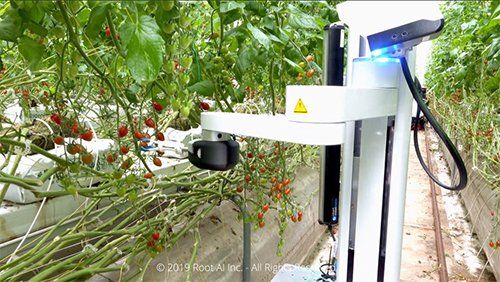
New Zealand company Robotics Plus has launched commercial innovations including the Āporo apple packer and an automatic log scaler, alongside a robotic kiwifruit harvester.
Smart Sensors
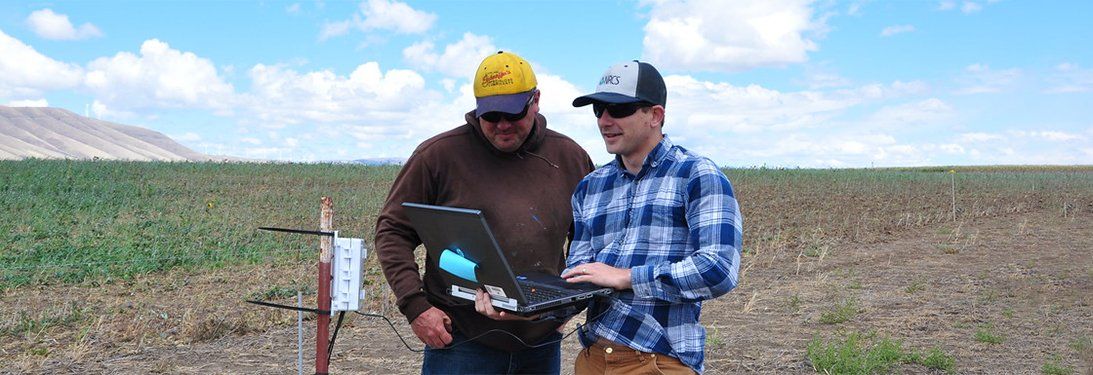
IoT-connected sensors placed near plants enable farmers to capture environmental data and send it wirelessly for analysis. This supports precision agriculture through connected soil moisture sensors paired with IoT-enabled water and fertilizer delivery systems.
ecoRobotix's AVO autonomous weeding robot uses solar power and scan-and-spray technology. Its multi-camera vision detects weeds, while LIDAR and ultrasound sensors identify obstacles. Farmers control it via mobile app and desktop web interface.
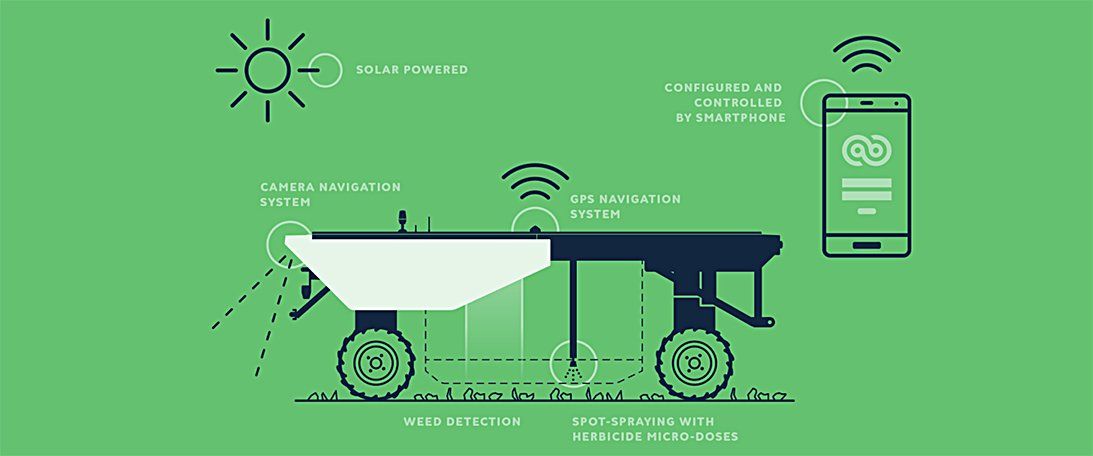
Smart-N technology from Vantage NZ Ltd uses VIS/NIR sensors to identify urine patches on pastures, optimizing fertilizer application while reducing costs and environmental impact.
Livestock monitoring has advanced with internet-connected collars and tags, alongside herd management software like Breedmanager for real-time tracking and breeding status management.
SmartCore, from Rogo Ag, is an autonomous robot that navigates fields and collects soil samples from consistent locations yearly, helping farmers track soil evolution. These data combine with tractor and aircraft software to determine precise water and fertilizer application.
Wireless mesh networking (including Bluetooth Mesh) enables sensors to communicate with each other and the internet, solving coverage challenges in remote areas. Smart tractors and harvesters can carry this network infrastructure without requiring pre-built systems.
Semi/Autonomous Tractors and Vehicles
Driverless farm vehicles have long required human oversight for emergencies. GPS technology enables autonomous ploughing and fertilizer spreading, with external sensors now replacing human supervision, a development pursued by manufacturers including John Deere, Case New Holland, AGCO, CLAAS, Same Deutz-Fahr, and Kubota.
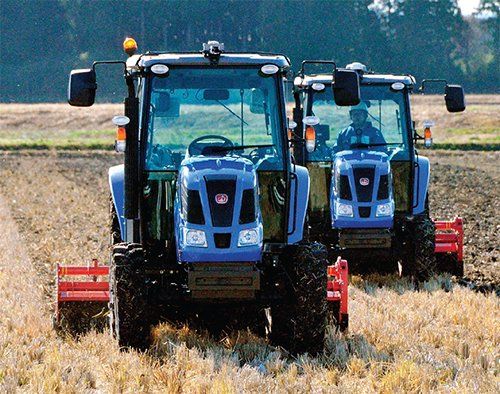
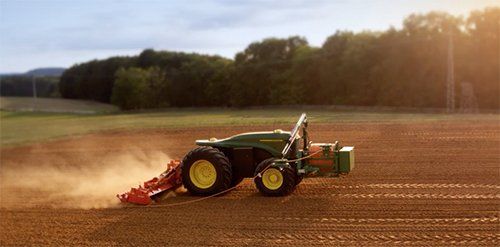
John Deere's GridCON represents a breakthrough: a fully electric, permanently cable-powered autonomous tractor developed with B.A.U.M Consult GmbH and TU Kaiserslautern. It connects with smart grid infrastructure, allowing farmers with on-site renewable energy to power operations directly.
The GridCON remains plugged in during operation, with a drum carrying approximately 1000 meters of cable guided by a robot arm. A 100 kW electric motor powers continuously variable transmission, with an additional 200 kW outlet for implements. Maximum autonomous speed reaches 20 km/h, with manual remote control options available.
Adoption rates depend on legislation, cost, and farmer acceptance.
Drones
As one expert notes:
"With the drone, you can go from visual data to multispectral data, to thermal data, to hyperspectral data all in one flight."
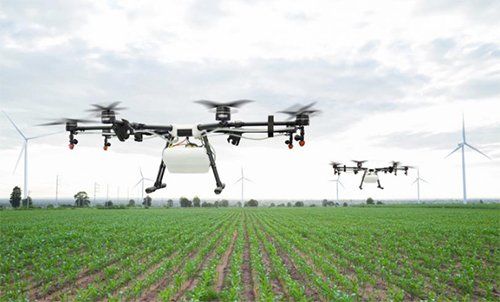
Drones equipped with high-definition cameras, infrared sensors, thermal imaging, and NDVI capabilities monitor crops and pastures, enabling crop-spraying, livestock management, and quality data collection.
PrecisionHawk found that drone-based data collection proved 2.5 times more efficient and 25% more accurate than manual plot measurements, with more objective and standardized results.
Conclusion
No single technology provides the complete answer. Effective agritech solutions integrate multiple technologies, autonomous tractors for precision farming, robots for harvesting and localized data gathering, and drones for broad-area spraying and monitoring. Cameras and various sensors fuse data through IoT devices that inform AI and app solutions.
The future features highly digital farm operations with sophisticated connected data collection technologies feeding into integrated farm management platforms for real-time decision-making, precision agriculture, increased profitability, and environmental sustainability.
Beta Solutions has developed IoT fuel monitoring devices, smart LED lighting arrays for horticulture, electric fence monitoring systems, guidance systems, and health & safety devices for agritech clients. Three team members won the AgTech Hackathon 2020 with Bugkilla, an innovative device combining pest control, artificial intelligence, and IoT technology designed to identify and eliminate brown marmorated stink bugs threatening New Zealand's kiwifruit industry.
Do you have an agritech idea or problem requiring a solution? Contact us or call today.